Geography Geography 4 min read

YOU CAN HAVE YOU CAKE AND EAT IT TOO

Mountain holidays for beach lovers: 10 American spots that have it all

Image: Brand Barmore

The eternal argument of whether to spend the holidays sunbathing on the beach or hiking in the mountains can be elegantly avoided if one of the following ten spots enters the discussion. These are magical landscapes where water, beaches, and mountains, or steep, forested hills, create a picturesque environment for the lucky visitor. Read on to find out where your next vacation could be.

1
Ventura County, California

Image: Paul Hanaoka

A place that hosts the annual Mountains 2 Beach Marathon is a sure bet if you are looking for a place that combines mountains and beaches. Mountain hiking and the classic California coastline lie within 26.2 miles of each other. Located northwest of Los Angeles, Ojai sits in a valley, and the village is dotted with art galleries, farmers markets, and high-desert hikes in the nearby Los Padres National Forest.

When the season is right, many trails can be followed through scrubland, sometimes revealing cascading waterfalls along the Rose Valley Falls Trail. But for waves, visitors head downhill to Ventura, a classic coastal town.

2
Westmoreland State Park, Virginia

Image: Alex wolf mx

Westmoreland State Park in Virginia was established in 1936 by the Civilian Conservation Corps. Covering 1,299 acres, the park offers sweeping vistas of the coastal plain and the Potomac River.

You can hike, boat, swim, camp, or fish in the majestic wilderness. And if you’re looking for an amazing view of the area, you can head to the natural attraction of Horsehead Cliffs, which rests high above the water.

3
Astoria, Oregon

Image: Nils Huenerfuerst

Oregon is likely one of the first states that come to mind when we think of a combination of beach and mountain. The coastal town of Astoria sits at the estuary of the Columbia River and the Pacific Ocean. It is perhaps most famous as the filming location of the 1980s film The Goonies .

The Pacific Northwest’s beaches have a picturesque quality that is hard to find elsewhere. Hiking trails are just outside the backdoor: the Cathedral Tree-Coxcomb Hill Trail, for example, starts at a 300-year-old Sitka spruce and climbs 164 stairs to offer views of the town, the Coastal Range, and the Pacific Ocean.

4
Herring Cove Beach, Massachusetts

Image: Quino Al

Herring Cove Beach is a national seashore located in Cape Cop and it’s recognized as part of the Cape Cod National Seashore. It’s a popular spot among Provincetown locals featuring warm, calm waters flowing from the Atlantic Ocean.

Activities in the area include swimming, walking along the coastal dunes, or exploring the Beech Forest Trail via bike or on foot.

5
Lake Tahoe, California, and Nevada

Image: Tim Peterson

A familiar name and for good reason, Lake Tahoe offers a beautiful shoreline without being anywhere near the coasts. Destinations like Sand Harbor Beach feature wide expanses of sand, freshwater swimming areas, and beach coves dedicated to snorkelers and divers.

This is the largest alpine lake in the U.S., so the pine-studded hills of the Sierra Nevadas practically tumble into the waters. This makes hiking easily accessible. The Rubicon Trail traces the shores of Emerald Bay and features incredible panoramic views, cliffs, coves, waterfalls, and even a lighthouse along the 13-mile round-trip route.

6
Fort Wetherill State Park, Rhode Island

Image: Praswin Prakashan

Located in Rhode Island, Fort Wetherill State Park is known for its historical significance in controlling the East Passage of Narragansett Bay. During the colonial era, a strategic battery was established to control this passage.

Because of its coastal location, the fort was also used during World War II. Nowadays, visitors come to explore this park and its coastal fort, which perches high atop granite cliffs.

7
Chimney Bluffs State Park, New York

Image: Frank Eiffert

Chimney Bluffs State Park is the spot where colossal rocky spires meet calm, collected waters. This park in New York sits along Lake Ontario on the south shore. To get a good view of the stunning chimney peaks and formations, you should hike the Chimney Bluffs Trail. The park is pet friendly too, so you can bring along your furry friends for the ride.

8
Calvert Cliffs State Park, Maryland

Image: Gary Cole

Calvert Cliffs State Park is not only one of the few parks with both mountains and ocean but it also displays a prized collection of 600 prehistoric fossil species. Between 10 and 20 million years ago, the cliffs at the park were submerged under the sea. But as the water receded, erosion and exposure of the cliffs occurred, unveiling massive fossils.

Visitors can walk, lounge at the soft sandy beach, investigate these fascinating fossils, trek near forested treelines, or admire the unusual cliffs that extend along the Calvert Peninsula.

9
Echo Lake State Park, New Hampshire

Image: Aaron Burden

Echo Lake State Park boasts two stunning ledges: White Horse Ledge and Cathedral Ledge, as well as a lake called Echo Lake. Each of these spots features scenic views of the area and top-notch sites for a family picnic. You can swim, walk, or hike the White Horse Ledge Loop Trail, a 3.1-mile loop.

10
Acadia National Park, Maine

Image: Peregrine Photography

Alongside Oregon parks, Acadia National Park is a prime example of a place that combines mountainous and seaside ambiance. Situated along the Atlantic coastline in Maine, it’s no wonder this impressive scenery attracts visitors for all types of recreational experiences, especially during the fall.

Rocky beaches, towering granite peaks such as the famous Cadillac Mountain, and miles and miles of natural treasure troves perfect for hikers are among the many features this park has to offer.

Geography Geography 6 min read

ON THE ROAD

From Magnificent Mile To Ocean Drive: 10 Iconic Streets In The U.S. Magnificent Mile To Ocean Drive : 10 Iconic Streets In The U.S.

Image: Marf Fanelli-Isla

Thanks to its vast territory and diverse cultural history, the United States has a large number of paradigmatic streets worth knowing . Whether you've visited them at some point or seen them in a movie, the 10 streets selected in this article will surely not surprise you. However, you may find one or two fun facts you didn't know about. For example, did you know that the Las Vegas Strip is not in Las Vegas? It’s always worth knowing a little more! Read on to learn this and other secrets about America's most iconic streets.

1
Sunset Boulevard, Los Angeles

Image: Nathan Dumlao

Sunset Boulevard is a famous Los Angeles street that spans approximately 24 miles. It runs through districts such as Hollywood, West Hollywood, Beverly Hills, and Bel Air. This iconic street's best-known section is the Sunset Strip , where you can find restaurants, hotels, boutiques, colorful billboards, comedy clubs, and nightclubs.

Today, Sunset Boulevard is synonymous with luxury and glamour, but it wasn't always the case. In the first decades of the 20th century, Sunset Strip was home to illegal casinos and was the go-to place to find alcohol during Prohibition. Then, in the 1930s and 1940s, the new restaurants and clubs were packed with the rich and famous . In the 1960s Sunset Strip became a meeting point for rock musicians and the hippie counterculture, who were later forced to leave when prices rocketed in the ‘80s.

2
Bourbon Street, New Orleans

Image: Kristina Volgenau

Bourbon Street is a historic street in the heart of New Orleans' French Quarter. Stretching 13 blocks from Canal Street to Esplanade Avenue, it is one of the wildest and rowdiest streets in the world . Famous for its numerous bars, restaurants, and art galleries, Bourbon Street is best known for hosting the annual Mardi Gras carnival.

But it has not always been a place for partying and madness. During colonial times, it was mostly a residential area and one of the most populous streets in the city. Contrary to popular belief, this street is not named after the famous liquor. It was actually named after the French royal family that reigned in 1721 when French engineer Adrien de Pauger designed the layout of New Orleans. Now, was the liquor named after the street? That, my friends, is a story for another article.

3
Lombard Street, San Francisco

Image: NISCHAL MALLA

Although it's known as "the crookedest street in the world," Lombard Street isn't even the steepest street in San Francisco . That title technically belongs to Vermont Street, between 20th and 22nd Streets in Potrero Hill.

Those curves on that 40-degree incline may seem dangerous to you now, but they were actually built to increase the safety of the street. The natural incline was considered too unsafe, so in the 1920s, a resident suggested creating a series of zigzag curves that would not only add scenic appeal to the street but also make it safer for pedestrians . Today, it is a major tourist attraction for the two million people who visit San Francisco every year.

4
Pennsylvania Avenue, Washington D.C.

Image: Library of Congress

Pennsylvania Avenue is known throughout the world as the heart of the nation's capital , as America's Main Street . American history has paraded, marched, strolled, and protested along this avenue since its creation. It is not just another street. This is where the country’s history and all the political power are concentrated: it is where the White House and the Capitol are located.

Pennsylvania Avenue, like the entire city of Washington, was specially designed in the late 18th century by French-American artist and engineer Pierre Charles L'Enfant at the request of George Washington. For many years, this diagonal street inspired by the Champs Elysees in Paris, was a graceless dirt road. That changed when Thomas Jefferson ordered rows of Black Poplar trees to be planted along it. Finally, in 1832, it was paved to best fight the dust and dirt.

5
Michigan Avenue, Chicago

Image: Jonathan J. Castellon

The most famous portion of Michigan Avenue is known as the Magnificent Mile . Crowned by tall skyscrapers, it has hundreds of luxury stores and restaurants . It is also filled with famous landmarks such as Millennium Park, Chicago Water Tower, and the Art Institute of Chicago, among other buildings.

The Magnificent Mile began construction during the 1920s as part of the Burnham Plan of Chicago, which recommended adding wider streets, parks, and new buildings. In 2007 it was chosen as one of the 10 Great Streets by the American Planning Association. Nowadays, the Magnificent Mile has become a favorite destination for more than 22 million tourists who visit Chicago annually.

6
Wall Street, New York City

Image: Uwe Conrad

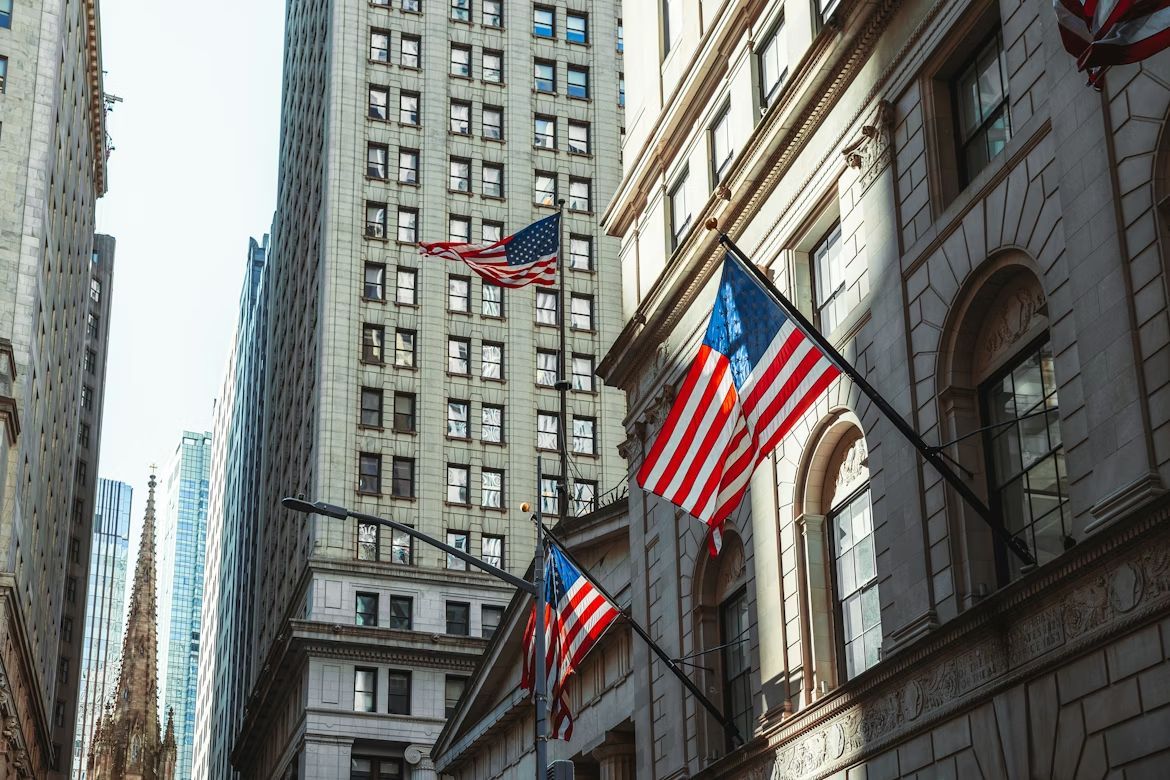
Wall Street is undoubtedly one of the most famous and well-known streets in the United States and the world. Located in Lower Manhattan, it is considered the "Financial District" because it houses multiple financial institutions and large banks , such as the Central Bank of the United States, the Federal Reserve, and the New York Stock Exchange.

But did you know why it's called like this? The Wall Street name refers to a wooden wall built by Dutch settlers to defend against possible attacks by British pirates during the Anglo-Dutch wars in the 17th century. Originally known in Dutch as Het Cingel —"the Belt" in English—, the wall was more than 2,340 feet long and approximately 9 feet high. It also had two gates, known today as the corner of Wall Street and Pearl Street.

7
Beale Street, Memphis

Image: Heidi Kaden

Beale Street in Downtown Memphis, Tennessee, is a street developed in the 1840s. Today it is best known for its pivotal role in the history of blues music, but was originally named after Edward Fitzgerald Beale, a military hero from the Mexican–American War. Part commercial, part suburbs, in the 1860s Beale Street was the go-to place for African American traveling musicians to perform.

Since then, blues and jazz legends such as Louis Armstrong, Muddy Waters, and Albert King have played on Beale Street, contributing to the development of the style known as Memphis Blues . In fact, B.B. King was once known as "the Beale Street Blues Boy." In 1977 this historic street was officially declared "Home of the Blues."

8
Newbury Street, Boston

Image: Aline Sales

Considered the "Rodeo Drive of the East," Newbury Street in Boston is one of the most expensive streets in the world . But did you know that once upon a time most of it was underwater? Until the mid-1800s, Newbury Street was part of Boston Harbor until it was filled in with dirt from neighboring communities. Back then, it was mostly a residential area with very little charm.

It wasn’t until the 1980s that Newbury Street started to become the trendy shopping mecca we know and love today. Surrounded by 19th-century brownstones turned into high-end boutiques and restaurants, nowadays you can find modern art galleries and concept stores that still retain the sophisticated style of its glory days.

9
Ocean Drive, Miami

Image: Dennis Rochel

The Ocean Drive boardwalk, located in the South Beach area, is probably the most popular street in Miami and one of the most famous in the world. Known for its white sand beaches, turquoise sea, and colorful Art Deco architecture , here you will find some of the best restaurants, bars, and hotels in the entire city.

Ocean Drive's history is full of reinventions. Originally, in the early 20th century, it was a dusty street. In the 1920s, Miami Beach became a tourist destination and the area began to develop. From the 1930s on, Ocean Drive was nicknamed the "Great White Way" and played host to big stars such as Frank Sinatra and Jimmy Durante . Today, after a remodeling that cost millions of dollars, the mythical street has been modernized and reborn.

10
Las Vegas Boulevard, Clark County

Image: David Vives

Did you know that the famous Las Vegas Strip is not within Las Vegas city limits? The Strip is a stretch of Las Vegas Boulevard, one of the most filmed and photographed streets in the United States. However, contrary to what many people think, it is located in the unincorporated town of Paradise , in Clark County.

Originally, the Strip was nothing more than a highway with a few nightclubs and motels. With the construction of the Flamingo Hotel in 1946, the Strip began to change and develop into what it is today. Regardless of its exact location, today the Strip is home to the most iconic hotels and casinos , including Caesars Palace, the Bellagio, and the Venetian, and is a must-stop for anyone visiting Sin City.

Explore more American facts

Choose your favorite category!

General
General

As American as apple pie—the very best America has to offer!

Culture
Culture

Delve into the astounding richness of American lore.

Geography
Geography

Hop in and explore vast and diverse American landscapes.

History
History

Discover the key moments that shaped the United States.