History History 6 min read

Paranormal activity

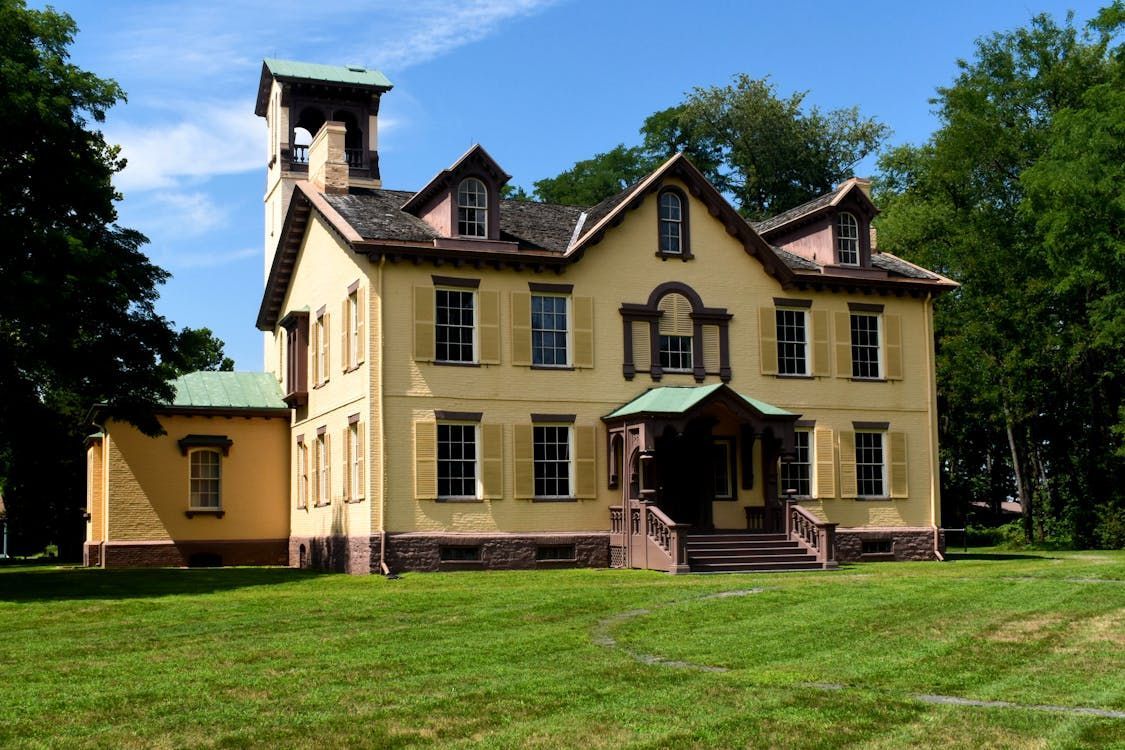
Have you heard of the eerie ghost town of Dudleytown?

Image: Mathew MacQuarrie

We all grew up hearing scary stories, legends, and myths. America is home to many spooky tales that could give even our bravest readers goosebumps. From evil spirits wandering the woods at night to mysterious sea monsters that lurk along the coasts, many of these stories remain unexplained to this day. If you consider yourself one of the bold, we invite you to read 10 of the most terrifying stories and legends from our land. Are you in?

1
Captain Tony's Saloon

Image: Nicolas Hoizey

Key West, Florida, is home to one of America's best-known bars: Captain Tony's Saloon. This mythical bar is not only famous for its drinks; it has a quirk that sets it apart from others. It's said to be haunted.

The building housing the bar today was built in the 19th century as a morgue. In 1865, a hurricane hit the area, taking everything in its path, including what was inside the morgue, if you know what we mean. Legend has it that the spirits, fueled by anger, remained to haunt the place for eternity. Decades later, a chilling discovery was made. During renovations, workers unearthed something macabre beneath the structure: bones.

For centuries and continuing to this day, different types of paranormal activity have been reported on the site, including cold spots, whispers, and even sightings of apparitions.

2
The Mothman

Image: David Clode

No one can deny that the 1960s was a tumultuous decade. But, in addition to the social and political issues that dominated the country and the world, West Virginia also witnessed a paranormal story.

In the mid-60s, a group of people claimed to have spotted a humanoid creature with large wings and red eyes silently watching them from a distance in remote areas of Point Pleasant. This story gave rise to the Mothman myth.

After the initial reports, more sightings followed, each more disturbing than the last. But what really makes your skin crawl is the detail most of these accounts share: the Mothman's creepy stare.

3
The Bell Witch

Image: Freestocks

If we discuss celebrity ghosts, we can't forget the Bell Witch, one of America's most famous specters.

The myth, which dates back to the early 19th century, tells the story of the Bell family, who lived on a farm in Tennessee. Legend has it that they began hearing strange noises in their home, and the spooky phenomena quickly increased. Objects moved on their own, and voices seemed to speak directly to the family. The spirit, later known as the Bell Witch, is said to have haunted the Bells for years, and even after the family members' passing, similar episodes continued to be reported at the site.

4
Dudleytown

Image: Adisa F

There is a valley in northwestern Connecticut that hides several spooky stories. Known as the Dark Entrance Forest, this area of "The Constitution State" is much more than just a scary name.

Located there lies an abandoned settlement: the mythical Dudleytown. The area was already inhabited by some people back in the early 1700s. Sadly, as the land wasn't fertile, the population declined. But it seems that was not the only reason.

It's said that the settlement was cursed: crop failures, diseases, and different types of paranormal events took place here. According to legend, the first inhabitants were descendants of an English nobleman accused of treason who fled to America and brought the curse with them.

5
Huggin' Molly

Image: Steinar Engeland

According to the people of Abbeville, Alabama, a famous specter haunts the streets, terrifying both children and adults —though she seems to have a particular preference.

We're talking about Huggin' Molly, a ghostly figure of a woman around 7 feet tall, dressed in a long black gown. She is known for letting out bloodcurdling screams in the night while she haunts children. The myth goes that if the ghost catches a child, she hugs them so tightly that it feels like suffocation.

The legend has persisted for centuries, and many claim to have seen or heard the figure of Huggin' Molly up close.

6
The Headless Horseman

Image: Dawid Tkocz

Washington Irving's 1820 short story, "The Legend of Sleepy Hollow," gave popularity to this ghostly figure. The Headless Horseman is depicted as a specter who rides through the night in search of his lost head. According to Irving's story, he was a soldier who died tragically, and his spirit wanders at night unable to find peace.

Over the years, many people have claimed to have seen the Headless Horseman or heard the sound of his horse's hooves in the Sleepy Hollow area.

7
Qalupalik

Image: Nsey Benajah

Huggin' Molly is not the only scary figure that terrifies children. In Arctic shorelines, more precisely off the coasts of Alaska and northern Canada, a creature that doesn't seem to be from this world is said to be roaming shallow waters.

We're talking about the Qalupalik, marine cryptids that resemble mermaids, those half-fish, half-human creatures from ancient mythologies.

According to lore, Qalupalik have long hair, fishtails, fins on their head, back, and arms, and webbed hands and feet. Legend has it that they emit a humming sound to warn those who stray too close to the water, as they search for human prey with a favorite target: children.

8
Sasquatch

Image: Francois Brill

The Pacific Northwest is the main stage for the legendary Sasquatch, also known as Bigfoot. This iconic ape-like figure, said to inhabit forests and mountainous areas, is characterized by its enormous size, giving rise to its name.

The myth has its roots in Native American folklore. Different native cultures tell similar stories about a large, monstrous, hairy, big-footed creature that appears in the wild at night and emits terrifying sounds. As if all this weren't enough, a detail makes it even scarier: it stands and walks on two legs.

In the 20th century, the myth gained strength after reports of huge, unexplained footprints in the Pacific Northwest.

9
The Jersey Devil

Image: Igam Ogam

If you've been to New Jersey (and even if you haven't), you've probably heard of the creepy Jersey Devil.

This infamous tale originated during the 18th century in the mysterious Pine Barrens. According to myth, a woman cursed her 13th child, who then transformed into a devilish creature with bat wings, hooves, and a goat's head.

Over the centuries, there have been multiple reports of strange winged creatures and chilling shrieks through the Pine Barrens. But it all escalated dramatically in the early 20th century when a wave of consecutive sightings triggered what was dubbed "The Jersey Devil Panic."

10
The Flatwoods Monster

Image: James Kovin

According to the story, in the 1950s, a strange rumbling sound was followed by a bright light in the sky, which reportedly came from an object that eventually landed near Flatwoods, West Virginia. When a group of people approached the scene, they were shocked by what they found. It was a tall, monstrous figure with an elongated head, glowing eyes, and a body that seemed to be encased in metal.

Investigators suggest that the light in the sky could have been a meteor, and the glowing eyes described by witnesses were likely those of a common owl. However, many people claimed to have seen this strange creature of totally unknown origin.
General General 4 min read

Not all fun and games

Who were the least-liked presidents in the history of the US?

Image: Sora Shimazaki

Becoming President of the United States is a tremendous honor, but it's not always a bed of roses. For one reason or another, quite a few who made it to the Oval Office weren't exactly well-liked or left office with reputations that are, at best, debatable. Historians haven’t overlooked Herbert Hoover’s inaction during the Great Depression, just as the public hasn't forgotten Nixon's role in the Watergate scandal. Join us as we take a look at 10 presidents often considered among the least popular in American history!

1
Richard Nixon (1969–1974)

Image: History in HD

One of the most controversial presidents in US history, Richard Nixon, led the country from 1969 to 1974. Although it's true that Nixon was indeed popular for his foreign policy achievements before the Watergate scandal, his involvement in that unforgettable episode forced him to resign, making him the first and only US president to step down from office.

2
Herbert Hoover (1929–1933)

Image: Tomasz Zielonka

Judging a president goes beyond assessing their decisions: a lack of empathy for the people they serve can be just as damaging. Herbert Hoover was president when the Great Depression began, following the stock market crash of October 1929. He maintained a largely hands-off approach that was harshly criticized as inadequate and led many to see the president as out of touch with the suffering of Americans.

3
Ulysses S. Grant (1869–1877)

Image: Library of Congress

Ulysses S. Grant, the 18th US President, was a polarizing figure. As a Union general, he played a crucial role in securing victory during the Civil War. However, during his presidency, there were several scandals related to corruption that affected his image negatively, both during his time in office and for many years afterward.

4
Andrew Johnson (1865-1869)

Image: Library of Congress

After Abraham Lincoln's assassination, Andrew Johnson served as the US president from 1865 to 1869, just six weeks after becoming Lincoln's vice president. It was a critical period in American history, and he is remembered for opposing many Reconstruction efforts . He even vetoed several key congressional initiatives, including the Civil Rights Act of 1866, though Congress overrode many of his vetoes. In 1868, Johnson became the first US president to be impeached.

5
James Buchanan (1857-1861)

Image: Library of Congress

Often ranked among the least popular presidents, James Buchanan led the nation during a period of deep internal division, just before Abraham Lincoln took office. Despite the growing tensions, he chose to stay out of the conflict. He's most often criticized for his inaction as Southern states began seceding from the Union and making only minimal efforts to prevent the Civil War.

6
Chester A. Arthur (1881–1885)

Image: Library of Congress

Some presidents aren't necessarily considered unpopular because of any specific scandal or failure, but rather they simply went unnoticed. One such figure is Chester A. Arthur, who served as president from 1881 to 1885 after the assassination of James A. Garfield. Although many historians view him as a capable and reform-minded leader, Arthur remains one of the most overlooked presidents in US history.

7
Warren G. Harding (1921–1923)

Image: Library of Congress

Warren G. Harding, the 29th President of the United States, is often regarded by historians as an ineffective leader. Although Harding himself wasn't directly involved, corruption scandals implicating members of his administration along with his inaction in response to them–did the most damage to his reputation and legacy.

8
Millard Fillmore (1850–1853)

Image: Pixabay

Millard Fillmore, who served as US president from 1850 to 1853, is widely criticized for decisions that deepened national divisions , most notably his signing of the Fugitive Slave Act. The law inflamed tensions in an already fractured nation, pushing the country even closer to civil conflict.

9
John Tyler (1841–1845)

Image: Joanna Kosinska

In 1841, John Tyler became the first vice president to assume the presidency following the death of a sitting president. His assumption of office was unexpected even for himself–and his frequent clashes with Whig Party leaders didn't help his image among voters. In fact, he was expelled from the party while still in office. To make matters worse, years after his presidency, Tyler sided with the Confederacy during the Civil War.

10
Zachary Taylor (1849–1850)

Image: Library of Congress

Zachary Taylor became the 12th President of the United States in 1849, but his sudden death in July 1850 meant his time in office lasted only 16 months. While he isn't necessarily disliked, he's less remembered, partly because of his short time in office.

History History 6 min read

Lights, camera, action!

Where does the word "Hollywood" come from? 10 glamorous secrets revealed

Image: MaxWdhs

Hollywood is, for many, the birthplace of cinema—and in a way, it is. But do you know how the first studios were set up, what the first film shot entirely on the West Coast was, the true story behind the famous Hollywood sign, or the reason for its name? Read on to discover 10 hidden secrets about the most famous—and glamorous—district of Los Angeles!

1
Origin of the name

Image: Brady Bellini

Contrary to what you might think, the name "Hollywood" has nothing to do with the film industry. The origin of the name of the city that would later become the Mecca of cinema is surrounded by many myths. One comes from the personal diary of a real estate developer named H. J. Whitley. Whitley recounts encountering an Asian man carrying logs on a dolly. When asked about it, the man reportedly replied, "hauling wood," which, to Whitley, sounded something like "holly-wood."

As colorful as this story may be, it is unlikely to be true. The legend that likely comes closest to reality involves Harvey Henderson Wilcox and his wife, Daeida, who purchased 120 acres of land west of Los Angeles. According to different theories, Daeida may have overheard the word on a train or picked it up from the estate name of an acquaintance from Illinois. Whatever the case, since the name was first written on Wilcox's 1887 land deed, it seems plausible that Daeida was the one responsible for naming the area.

2
Movie theaters were prohibited

Image: Arthur Rothstein, Public domain, via Wikimedia Commons

H. J. Whitley may not have christened the area, but he did a lot to promote its development. He invested heavily in installing electricity, built the Hollywood Hotel to attract land buyers, and developed the residential neighborhood of Whitley Heights. The area began to flourish, and by the early 20th century, the new municipality boasted a post office, a local newspaper, and two markets.

The inhabitants of Hollywood, by majority vote, decided to forbid the sale of liquor within the city, including in restaurants and hotels. Movie theaters were also banned . However, when Hollywood was incorporated into Los Angeles in 1910, which had no such restriction, history changed forever.

3
The motion picture industry conquers Hollywood

Image: Bain News Service, Public domain, via Wikimedia Commons

​​In the early 1900s, most film production companies were based in New York and New Jersey. However, the so-called "patent wars" encouraged them to move to the West Coast. At the time, the industry was virtually monopolized by Thomas Alva Edison, who owned the majority of the camera equipment patents.

Many companies rebelled against the abusive rates and decided to relocate to Los Angeles, where they could more easily evade these restrictions. In addition, the weather there was better and the days were longer, which allowed them to work more hours and spend less on electricity. If we add the low land prices to the mix, it’s no surprise that Hollywood became the ideal location to establish the capital of the motion picture industry.

4
The first film

Image: See page for author, Public domain, via Wikimedia Commons

The prolific film director D. W. Griffith, who had already made around 50 short films in New York, was one of the many who migrated to Hollywood to get rid of patent restrictions. In fact, he directed the first film shot entirely in Hollywood. In Old California is a 17-minute western set during California’s Mexican era.

Later, in 1915, Griffith would release The Birth of a Nation , one of the most important and controversial films in the history of the seventh art. This film, also shot in Hollywood, solidified Griffith’s reputation as one of the pioneers of narrative filmmaking .

5
The first studio

Image: masbet christianto

The first permanent motion picture studio established in Hollywood was the Nestor Motion Picture Company, a subsidiary of the Centaur Film Company from New Jersey. In 1911, brothers David and William Horsley built a rudimentary stage behind the Blondeau Tavern, at the intersection of Sunset Boulevard and Gower Street. Production started immediately, with films such as Her Indian Hero and The Law of the Range .

Despite their pioneering efforts, the Nestor Company faced the same fate as many other small studios of the era: its lifespan was short . In 1912 it was absorbed by the emerging Universal Studios, although it kept its name until 1917. In the 1930s, the original building was demolished to build the Columbia Square facility.

6
The truth about the Hollywood sign

Image: waterandpower.org, Public domain, via Wikimedia Commons

The Hollywood Sign is a cultural icon not only of Los Angeles but of the entire United States. Do you know how it ended up on top of Mount Lee? In 1923, a publicist erected the famous 50-foot-tall white uppercase letters to promote a local real estate development called "Hollywoodland." The sign was originally intended to last only a year and a half, but the booming movie industry ensured its longevity.

With the great economic crisis of the 1930s, the company went bankrupt and the famous sign was neglected—even losing the "H," leaving it to read "Ollywoodland" for several years. In the late 1940s, the city decided to restore it, but the Chamber of Commerce ordered the last 4 letters to be removed so that it would no longer be associated with the company but with the town.

7
First Oscars ceremony

Image: Engin_Akyurt

Everyone knows that the Oscars are the world's most prestigious film awards. But did you know that the ceremony has been held annually for almost 100 years? On May 16, 1929, as talkies were just beginning to rise in popularity, 270 film industry personalities gathered at the Roosevelt Hotel. That evening, 15 statuettes were awarded to give the booming film industry an air of prestige and glamour.

The inaugural night was filled with interesting curiosities. For instance, the recipients of the awards were announced publicly three months before the ceremony . Additionally, the event was not broadcast in any form of media. Another fun fact: In the early years, the Academy Awards included a banquet. However, in 1942, due to increased attendance and the impact of World War II, the banquets were replaced with more modest theater ceremonies.

8
Walk of fame

Image: Neelix at en.wikipedia, Public domain, via Wikimedia Commons

Every high-profile artist has a star on the Hollywood Walk of Fame—even the Muppets have one! Along 15 blocks in Hollywood Boulevard, approximately 2,800 five-pointed terrazzo-and-brass stars honor some of the world’s most beloved celebrities, including actors, directors, musicians, athletes, and even fictional characters.

In 1953, the head of the Hollywood Chamber of Commerce came up with the idea of creating a publicity stunt to promote those whose names stand for glamour and prestige. Finally, in 1960, the first star prototypes were installed, honoring icons such as Joanne Woodward and Burt Lancaster. Today, this popular landmark is visited by millions of tourists every year.

9
Time capsule

Image: StockSnap

Few people know that beneath the mythical stars lies a very special treasure. To commemorate the Hollywood Walk of Fame's half-century of existence, the Chamber of Commerce buried a time capsule beneath the spot where it originated, at the corner of Hollywood Blvd. and Highland.

The 16 x 16 x 18-inch capsule holds an array of artifacts that celebrate Hollywood’s enduring mystique. Among its contents are the screenplay of Casablanca , recordings of Oscar ceremonies from 1960 to 2010, programs from the musicals Wicked and The Lion King , and messages from various Academy members. These priceless mementos are set to resurface during the Walk of Fame's 100th anniversary celebration in 2060.

10
The Hollywood Forever Cemetery

Image: Judyfan1922 at English Wikipedia, Public domain, via Wikimedia Commons

With its legendary sign, iconic Walk of Fame, and countless beloved films and celebrities, Hollywood truly has it all. For this reason, it is only fitting that the city also boasts a peaceful and beautiful resting place for stars after their deaths. Founded in 1899, the Hollywood Forever Cemetery is the final resting place of many stars, including Judy Garland, Cecil B. DeMille, Don Adams, and Peter Lorre.

Located in the heart of Hollywood and adjacent to Paramount Studios, today this cemetery is a tourist attraction visited by many. In fact, on weekends during the summer the cemetery screens outdoor films for everyone to enjoy!

Explore more American facts

Choose your favorite category!

General
General

As American as apple pie—the very best America has to offer!

Culture
Culture

Delve into the astounding richness of American lore.

Geography
Geography

Hop in and explore vast and diverse American landscapes.

History
History

Discover the key moments that shaped the United States.