General General 5 min read

CUSTOM BEHAVIOR

Are You a Fan Of Tailgating? 10 American Traditions You Probably Follow!

Image: frank mckenna

Traditions are important as they serve as a testament to one’s culture and heritage. Despite the diverse nations and cultures coexisting within our country, American traditions are quite strong and challenging to evade.

Have you ever had a backyard barbecue or eagerly anticipated the Thanksgiving parade sitting on your couch next to your loved ones? This is evidence of your deep-rooted American identity and here we are to see ten of those customs that make us who we are . Are you ready?

1
Backyard Barbecues

Image: Maude Frédérique Lavoie

You say American, you smell a barbecue, isn’t that right? Backyard barbecues are probably one of the most American traditions there is and it is all about that summer fun we all love!

Casual gatherings on a hot summer day to grill some meat is a favorite pastime for all. Adults chat while grilling some burgers or hot dogs, and the kids play. Everyone has fun!

This tradition, like many others, is about good food, good company, and having a great day outdoors.

2
Gameday Tailgating

Image: Scott Madore

Pre-game events? Isn’t the game enough? A tailgate party is a social event held on and around the open tailgate of a vehicle. Tailgating often involves consuming alcoholic beverages and grilling food.

Hours before kickoff, fans tailgatein the parking lot with burgers on the grill and a football to toss. It is a fan gathering, a get-together to celebrate your team and get you in high spirits for the game ahead!

3
Family Game Nights

Image: Stephen Harlan

All it takes are those simple traditions, and sometimes they are the best traditions. A night of family games is an ideal opportunity to spend a few hours around the table having quality time with the ones you love.

Board games, card games, or even video games! It all comes down to bonding, some good-natured rivalry, and some potentially-not-very-serious debates on how to interpret the rules.

4
Turkeys Pardon

Image: Claudio Schwarz

If you don’t comply with many national traditions, this is one you definitely can’t evade. Thanksgiving has many rituals surrounding the holiday, but probably the most bizarre one is the ceremony by means of which the president officially grants a live turkey their pardon.

This is exactly as it sounds, traditionally, the president is gifted a turkey whose life is spared from the stove. The origins of this tradition are disputed but, regardless of who was the first to do so, this tradition continues today and it is one of the things that make Thanksgiving an amazing holiday!

5
Black Friday Shopping

Image: CardMapr.nl

The end of the year can easily become a chaotic time with all the gifts one has to get ready. Just as thousands of turkeys go unpardoned by the president, many shoppers take time to find the right Christmas gifts for their loved ones. The national weekend shopping kicks off with Black Friday, a day in which sales are high and shoppers are on alert . This shopping spree continues with Small Business Saturday and ends with Cyber Monday.

However this is one tradition that can escalate rather quickly, haven’t we all witnessed deadly stampedes or frantic arguments to get that one item?

6
Baby Showers

Image: Ajeet Singh

Celebrating a new child is customary in many cultures. All over the world babies to come are honored in many ways, but the American way is something else.

Baby showers are the traditional way to celebrate the mother and the child. They are gatherings in which friends and family "shower" the mother with gifts for the baby to come. It is worth noting that this tradition has evolved and it includes gender reveals now too.

Thanks to social media and the quick spread of news, baby showers have become a tradition in many countries now, but it all started in America!

7
Supersized Food

Image: Visual Karsa

You’ve surely been to McDonalds or Starbucks, have you ever stopped and thought about how they offer you different sizes of food and cups ? Why is that?

Well, this is already embedded in the American DNA. In our country, fast food or takeaway orders come in different sizes. And that is not all, the smaller size is not small at all; a nd the biggest is exactly as the title says, supersized.

This practice can be traced to the 70s when marketing directors saw a way to sell more for lower prices. This tradition became customary in many countries too, but each nation adapted their sizes to their customers.

8
Trick-Or-Treating

Image: Nick Fewings

Halloween is a festive time, customs come out and decorations get put up. Many cultures follow these traditions, but America is different in that children in our country go on a door-to-door hunt for candy. But that is not all, the practice is not complete until a child says "Trick or treat!"

Lovely as they are to see, the magic words are a requirement to get those precious pieces of candy they will later enjoy with their friends and family . They only have to hope the giver doesn’t require a trick from them!

9
Display Of National Symbols

Image: Serena T

If you are one to watch movies often, we have a challenge for you: try and spot the American flag in the movie you’re watching. No, we don’t work in the film industry, we know for a fact that American pride is shown in many ways, and displaying the American flag is probably the most common one.

Houses all over the country display a flag, American movies have at least one scene in which you can spot it, and the colors dress thousands of objects in all kinds of celebrations . Is there a flag in your front yard?

10
Road Trips

Image: Raphaël LR

Americans are hard workers, but like everyone else, they await those well-deserved holidays to get their feet up and chill out. Regardless of the available budget, which may vary from family to family, road trips are highly popular in our nation and they are not so common in other countries.

Mostly because of how vast the American territory is , road trips are the perfect way to travel and see all the wonders the United States has to offer. True Americans go on at least one road trip in their life, have you done it already?
Culture Culture 5 min read

Obsolete occupations

12 forgotten jobs that once existed and became obsolete

Image: Igor Saikin

At various points in history, people earned a living performing jobs that sound downright strange today. Folks once knocked on windows to wake strangers for work. Others spent their days resetting bowling pins by hand, lighting streetlamps at dusk, or harvesting ice from frozen rivers. Machines have certainly made life easier in many ways, but they have replaced the livelihood of many. Here’s a small handful of some forgotten jobs that were once fundamental to everyday life in America and elsewhere in the world.

1
Town crier

Image: Birmingham Museums Trust

In early American towns (and elsewhere in the world), before printed media and mass communication were the norm, news didn’t arrive through newspapers or broadcasts: it arrived by voice. Town criers walked streets ringing bells and loudly announcing public notices, laws, and important events . They were essential in communities where literacy was limited, and information traveled slowly.

2
Factory lectors

Image: Amsterdam City Archives

Nowadays, when you have some manual, boring labor to do, you can turn on the radio, listen to some music, or a podcast. Of course, that wasn’t an option once upon a time. In some factories, workers hired a lector to read aloud while they worked .

Starting in the mid 1800s and into the beginning of the 1900s, lectors in factories shared newspapers, novels, and political texts, keeping workers informed and entertained during long hours.

3
Elevator operator

Image: Possessed Photography

Using an elevator seems easy enough today, but for decades, elevators didn’t run themselves. Operators manually controlled speed, direction, and stopping points using levers and switches , while also greeting passengers and announcing floors.

In luxury hotels and department stores, a skilled, often uniformed operator was part of the experience, expected to be polite, precise, and calm under pressure. The job peaked in the early 20th century, especially in big cities like New York and Chicago.

4
Switchboard operator

Image: Matt Benson

For early telephone calls, switchboard operators had to manually plug cords into panels to link callers together . The occupation rose shortly after Alexander Graham Bell patented the telephone in the 1870s, and became a fundamental job until the middle of the following century, when direct dialing was introduced.

Most operators were women, chosen for their calm voices, speed, and courtesy. They often memorized local names, numbers, and even callers’ personal habits and routines.

5
Bowling pinsetter

Image: engin akyurt

In early bowling alleys, pins did not magically reset themselves via machines. Pinsetters stood behind the lanes, manually rearranging pins after every roll.

It was noisy, repetitive, and sometimes dangerous work, often done by teenagers . It was only in the 1950s that automatic pinsetting machines were introduced.

6
Lamplighter

Image: Jason Peter

Since the beginning of the 19th century, every evening, lamplighters walked city blocks, lighting gas lamps one by one . At dawn, they returned to extinguish them. This job was vital for public safety because the lights helped prevent crime and accidents in dark streets.

It wasn’t until the 1880s that the first electric streetlights were introduced in some cities, but they weren’t the norm until the 1950s. At that point, the cost of maintaining gas pipes had become too high compared to electricity, so the last gas lamps were removed.

7
Milkman

Image: Nationaal Archief

For the first half of the 20th century, the milkman was a familiar sight on American streets. He delivered fresh milk in glass bottles, leaving them in insulated boxes by the door. Many families depended on daily or near-daily deliveries, since refrigeration was limited or unreliable. By the 1940s, however, most American homes owned a refrigerator and the role of milkmen slowly faded.

8
Typist

Image: Denise Jans

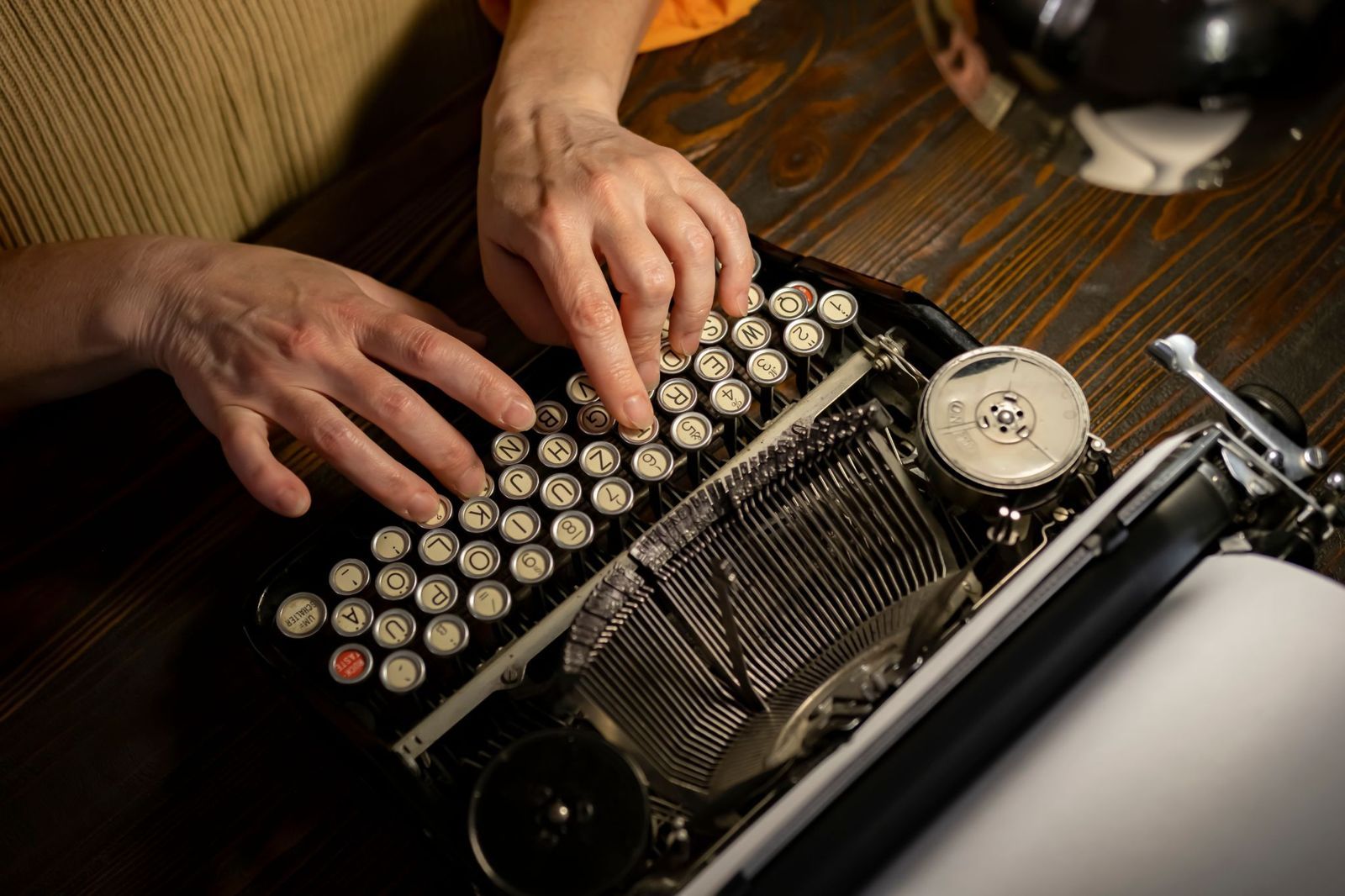
There was a time, before computers, autocorrect, and AI, when offices relied on professional typists to produce everything from letters to legal documents. Many large companies employed entire "typing pools," rooms filled with workers trained to type quickly and accurately on typewriters. Precision mattered more than you may think; unlike today, mistakes on paper (rather than the screen) sometimes meant starting the document over.

9
Human computer

Image: Roman Mager

There was also a time when "computers" were people; their occupation was first mentioned in texts from 1613. Their role was to develop complex mathematical calculations by hand for scientific research, engineering projects, and more. Astronomers during the Renaissance, navigators during the Age of Exploration, and NASA space missions all relied on human computing for their operations.

Imagine that: teams worked through equations for hours or days, checking each other’s math for accuracy. During World War II and the early Cold War, this work was vital to national defense.

10
Knocker-upper

Image: Annie Spratt

Before the Industrial Revolution, most people woke up with the sun. However, by the early 1800s, when factory systems took hold of big cities, being even five minutes late ceased to be an option for workers. To avoid oversleeping, which could mean lost wages, they paid a person to wake them up.

Knocker-uppers walked neighborhoods early in the morning, tapping on windows with long poles or shooting dried peas through blowpipes . Eventually, alarm clocks were introduced in the late 1800s, and the need for this occupation started declining.

11
Telegraph operator

Image: Amsterdam City Archives

A case in which the occupation disappeared along with the technology. Before phones and instant messaging, the telegraph, which was invented in 1837, was the fastest way to send information across long distances.

Telegraph operators translated messages into Morse code , sending dots and dashes through wires that spanned the country. Speed and accuracy were critical, especially for news, business, and wartime communication. With the introduction of radio transmissions and telephones in the late 1800s, the service became more and more obsolete, although Western Union, the major telegraph service in the US, continued to operate until 2006.

12
Iceman

Image: Joy Ru

Finally, there were the icemen. Before refrigerators became household staples, the iceman was an essential figure in American daily life. He delivered massive blocks of ice straight to people’s homes .

These blocks kept food fresh and milk cold in an era before electric cooling. Ice was harvested from frozen lakes in winter, stored in insulated warehouses, and rationed carefully during warmer months.

Culture Culture 4 min read

Unforgettable lines

These 13 TV catchphrases are still stuck in your head—admit it!

Image: Shutter speed

TV in the golden years gave us more than just entertainment—it gave us catchphrases we’ve been quoting ever since. Whether you were glued to your set in the ‘60s or rewinding VHS tapes in the ‘80s, chances are these lines are burned into your brain. They were punchy, funny, and unforgettable. And let’s be honest—sometimes they still sneak out of our mouths even now. Let’s stroll down memory lane and revisit the most iconic catchphrases from classic American TV.

1
"How you doin’?" – Friends

Image: Malavika Pradeep

Friends gave us a lovable group of New Yorkers navigating life and love. But it was Joey Tribbiani’s cheesy yet charming "How you doin’?" that stole the spotlight. This flirty greeting, delivered with a confident grin, became a pop culture gem and Joey’s signature move. It’s the kind of line that can’t help but make you smile—even if you’re not on a date at Central Perk.

2
"You got it, dude", "How rude!", and "Have mercy" – Full House

Image: H031175

Full House warmed hearts with its family-centered humor and wholesome charm. Michelle Tanner, the tiny powerhouse, gave us "You got it, dude," and "How rude!"—adorable comebacks with surprising sass. Meanwhile, Uncle Jesse’s "Have mercy" was his smooth, rock ’n’ roll way of reacting to… well, just about anything worth swooning over.

3
"Well, isn’t that special?" – Saturday Night Live

Image: Asit

With sketches that parodied everyone and everything, SNL gave us the ultra-judgy Church Lady. Dana Carvey’s purse-lipped creation mastered the art of sarcasm. You didn’t need to be holy to recognize that smug tone.

4
Fonzie’s "Aaaay" – Happy Days

Image: Robbie Noble

Arthur Fonzarelli, aka Fonzie from Happy Days , made leather jackets cool and jukeboxes come to life with a single punch. His signature "Aaaay," complete with thumbs-up, said it all—cool, confident, and just a little bit rebellious.

Whether he was fixing a motorbike or schooling Richie on life, Fonzie’s catchphrase became a national symbol of laid-back swagger.

5
"Did I do that?" – Family Matters

Image: White.Rainforest ™︎ ∙ 易雨白林.

Steve Urkel from Family Matters was the lovable nerd who left a trail of chaos behind him. Whenever a plan backfired—and we all know they usually did—he’d pop out with his nasal "Did I do that?" It was part apology, part mischief, and it made Urkel a household name. That clumsy charm was irresistible, even when he turned the Winslows’ house upside down.

6
"Yada, yada, yada" and "Newman" – Seinfeld

Image: Dilip Ale

Seinfeld , the "show about nothing," gave us plenty of quirky phrases. "Yada, yada, yada" became shorthand for skipping the boring parts—or hiding juicy gossip. And then there was Jerry’s exasperated, drawn-out "Newman" whenever his nemesis neighbor appeared. Both lines are still used today. Sometimes, saying very little says it all.

7
"Dy-no-mite!" – Good Times

Image: J Williams

J.J. Evans from Good Times had a big personality and an even bigger catchphrase: "Dy-no-mite!" He’d shout it with such enthusiasm that you couldn’t help but laugh. It captured his upbeat attitude in a show that balanced humor with tough realities. That one word became a rallying cry of fun and energy in every episode.

8
"And that’s the way it is" – CBS Evening News

Image: appshunter.io

Walter Cronkite signed off each evening with calm, steady authority: "And that’s the way it is." It wasn’t flashy, but it became iconic because it felt real and trustworthy. In a time when Americans gathered around the TV for the news, that line gave a sense of closure and comfort after a long day.

9
"Come on down!" – The Price Is Right

Image: Kenny Eliason

The Price Is Right turned everyday folks into instant game show stars with four exciting words: "Come on down!" Bob Barker’s booming voice (and later Drew Carey’s) invited contestants to race down the aisle and guess the price of, well, just about everything. That line still gets hearts racing for bargain hunters and lucky guessers alike.

10
"Yabba Dabba Doo!" – The Flintstones

Image: papazachariasa

Fred Flintstone’s caveman cheer, "Yabba Dabba Doo!" from The Flintstones was pure cartoon joy. Whether he was sliding down a dinosaur’s tail after work or just in a good mood, that prehistoric phrase made everyone’s inner child want to shout it too. It was goofy, energetic, and unforgettable.

11
"Norm!" – Cheers

Image: Quan Nguyen

Whenever Norm walked into Cheers , the whole bar would greet him with a booming "Norm!" It wasn’t just a greeting; it was a welcome from friends who felt like family. That running gag captured the cozy, familiar vibe of the show, where everybody really did know your name.

12
"Nip it in the bud" – The Andy Griffith Show

Image: Glenn Carstens-Peters

Barney Fife, the overly enthusiastic deputy from The Andy Griffith Show , had his own way of handling trouble: "Nip it in the bud!" He meant to squash the problem early, though his methods were often hilariously over the top. The line became a comical mantra for over-preparing and overreacting—Barney style.

13
"Marcia, Marcia, Marcia" and "Oh, my nose!" – The Brady Bunch

Image: Bruna Araujo

The Brady Bunch gave us sibling drama in its purest form. Jan’s jealous cry of "Marcia, Marcia, Marcia" captured classic middle-child woes, while Marcia’s anguished "Oh, my nose!"—after getting hit with a football—was a dramatic moment that still gets laughs. Both quotes are etched into the memories of anyone who grew up watching the blended Brady family.

Explore more American facts

Choose your favorite category!

General
General

As American as apple pie—the very best America has to offer!

Culture
Culture

Delve into the astounding richness of American lore.

Geography
Geography

Hop in and explore vast and diverse American landscapes.

History
History

Discover the key moments that shaped the United States.