History History 3 min read

No bad titles here

These 12 popular movies have very different names in other countries

Image: Yuvraj Singh

Granted, not every name sounds as great in its original language as it does when translated. Therefore, a certain degree of artistic liberty is granted when coming up with good movie title translations. However, some of these adaptations take a bit too much freedom in their detachment from the original title. Take a look at the following 12 examples and marvel at the creativity and sense of humor of their translators.

1
The Blues Brothers - Rogues at Full Speed (Spain)

Image: Tanner Boriack

The Blues Brothers sounds like a pretty straightforward name, right? Not for the Spanish , who are very protective of their native language and translate every movie title that comes across their border. When this 1980 movie was released in Spain, its title could have been easily translated as " Los Hermanos del Blues ," but, for some reason, it was named Rogues at Full Speed .

2
Die Hard - The Crystal Jungle (Spain)

Image: Yns Plt

The second entry on the list is also awarded to Spain for its creative title translation of Bruce Willis’ Die Hard as The Crystal Jungle . The reasons for this name remain a mystery . Perhaps it had something to do with the fact that the city can be considered a jungle, and a significant part of the movie takes place in a city. Other than that, we're stumped.

3
Leon The Professional - This Hit Man is Not as Cold as He Thought (China)

Image: Matt Seymour

The Chinese translators of the French movie Léon: The Professional decided that the title wasn’t descriptive enough and opted instead for a name that served as a commentary on the main character .

4
Airplane - The Unbelievable Trip in A Wacky Aeroplane (Germany)

Image: Niels And Marco

Apparently, the Chinese are not alone when it comes to inventing more descriptive names for the movies they translate. The German version of the slapstick comedy Airplane! is translated as The Unbelievable Trip in a Wacky Aeroplane .

5
Thelma and Louise - An Unexpected Ending (Mexico)

Image: Amanda Sandlin

An implied rule when it comes to movie titles is that they should not be spoilers . Mexican translators decided to partially, at least, ignore this rule and went with An Unexpected Ending for the local version of Thelma and Louise . Yes, there could be countless possible unexpected endings, but still...

6
Willy Wonka and the Chocolate Factory - The Boy Who Drowned in Chocolate Sauce (Denmark)

Image: Kaffee Meister

It's well known that Scandinavians have a dark sense of humor , but some things are still surprising. Willy Wonka & the Chocolate Factory , the 1971 movie featuring Gene Wilder in the title role, received an odd translation from the Danish.

7
Ghostbusters - Exorcists of Spirits (Serbia)

Image: Winston Chen

Serbians are no strangers to the supernatural . Many ghost stories and myths can be found in their beautiful and mysterious land. Perhaps that is why the people responsible for translating Ghostbusters thought it was acceptable to modify the original name to Exorcists of Spirits .

8
Grease - Pomade (Hungary)

Image: Lachlan Rennie

This one is not as far off as the previous examples, but there is something about it that just doesn’t sound quite as right as the original title. Who knows? Maybe that’s what Hungarians call their hair gel .

9
Home Alone - Mom, I Missed the Plane (France)

Image: Liubomyr Vovchak

The French translators could have done a lot worse with this one. After all, while the film’s storyline involves Kevin being stuck home alone, he ends up stuck at home because he missed his flight in the first place .

10
Annie Hall - The Urban Neurotic (Germany)

Image: Dylan Freedom

Yes, this is a Woody Allen movie, and yes, the main character, aside from Annie herself, is an urban neurotic. Maybe that’s why the German translators decided, once again, to change the simple original title of the movie to a description of the leading man’s character .

11
Cloudy with a Chance of Meatballs - It’s Raining Falafel (Israel)

Image: Clark Douglas

Similar, but not the same— not by a long shot. The Israeli title for this children’s movie evokes a somewhat similar image to the one in the original title, but it does so with a more local dish as the element replacing the rain .

12
Deep Impact - The End of the World, the Sky Collapsed, and the Land Collapsed (Thailand)

Image: Viktor Mindt

Some movie title translations seem as if they were written by small children. But then, maybe that’s the kind of content their audience demands, in which case, more power to them. Deep Impact sounds ominous enough, sure. But a title like The End of the World, the Sky Collapsed, and the Land Collapsed is much more exciting , isn’t it?
General General 3 min read

Banned in the USA

Would you ban velvet Elvis paintings? These towns really did it

Image: Dmitry Alexandrovich

The Land of the Free has had its fair share of strange bans over the years, and not all of them make sense today. From quirky laws to outright odd restrictions, plenty of everyday things have been outlawed at one point or another. Here are 12 unusual things that, believe it or not, were once banned in the U.S.

1
Sliced bread

Image: Laura Ockel

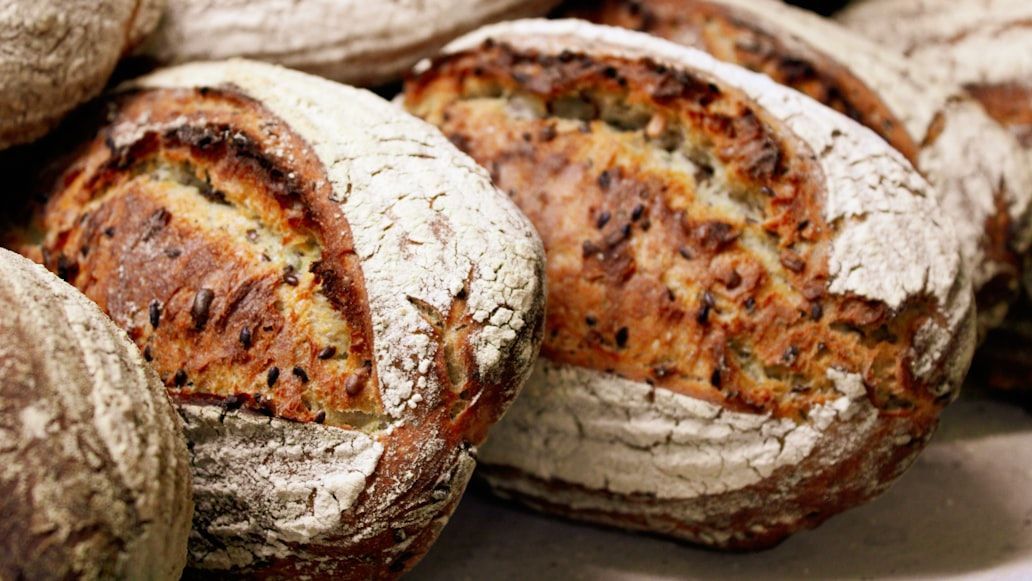
Not even the best of inventions are safe from odd bans. In 1943, the U.S. government temporarily banned pre-sliced bread as part of wartime resource conservation .

Thankfully, the ban only lasted a few months. Housewives, bakeries, and even newspapers complained, arguing that sliced bread was a necessity. The ban was lifted quickly due to public backlash.

2
Pinball machines

Image: Louie Castro-Garcia

Believe it or not, from the 1940s until the mid-1970s, pinball machines were outlawed in several major cities, including New York and Chicago. Officials claimed the machines promoted gambling and corruption .

Machines were confiscated and destroyed. The ban finally ended when it was proven that pinball was more skill-based than luck, leading to its revival as a popular arcade game.

3
Yo-Yos

Image: Eric Prouzet

During the 1930s, some U.S. towns banned yo-yos, believing they caused bad luck and distracted children from schoolwork . The fad was seen as both frivolous and superstitious.

Though short-lived, the bans show how something as harmless as a toy could spark moral panic and strange local laws.

4
Christmas

Image: Erwan Hesry

In the 1600s, the Puritans of Massachusetts Bay Colony banned Christmas , claiming it was rooted in pagan traditions and encouraged rowdy behavior .

Anyone caught celebrating risked punishment or fines. It wasn’t until the mid-1800s that Christmas gained widespread acceptance in the U.S.

5
Dancing after midnight

Image: Scott Broome

At different occasions during the 20th century, some cities enforced laws that restricted or outright banned late-night dancing . New York City’s "Cabaret Law" limited dancing to licensed venues only.

Authorities argued it was about maintaining order, but many saw it as cultural repression. By the 1990s, these laws faced strong opposition, and most have since been repealed, allowing nightlife to thrive.

6
Comic books

Image: Waldemar

Comic books have been a scapegoat for different things in different periods. For example, in the 1950s, they came under fire, accused of corrupting America’s youth . Parents, educators, and politicians believed violent and horror-themed comics encouraged delinquency.

Entire towns banned sales, and even public book burnings took place in different corners of the country.

7
Yellow margarine

Image: Marine Le Gac

Being a substitute for butter, margarine was heavily lobbied against by dairy farmers in the late 1800s. Several states passed laws banning margarine dyed yellow to resemble butter .

As a result, margarine was sold plain white, or consumers had to mix in dye packets themselves. These odd restrictions lasted well into the mid-1900s before finally being repealed.

8
Men’s long hair

Image: Siri louis

During the 1960s and 70s, schools across the U.S. cracked down on boys with long hair . Beatles-inspired styles were viewed as rebellious, unclean, and disruptive.

Some students were suspended or expelled over hair length. These policies reflected the cultural clashes of the era.

9
Left-handed writing

Image: Anna Savina

For much of the 19th and early 20th centuries, left-handed students were forced to switch hands . Teachers tied their left arms or punished them until they wrote with their right hand.

This practice was based on superstition and prejudice, with left-handedness considered "wrong" or even sinister.

10
Bathing suits above the knee

Image: Brett Jordan

In the early 1900s, strict laws dictated swimwear modesty at public beaches . Bathing suits that rose above the knee could result in fines or even arrest by "beach police."

Photographs from the time show officers measuring swimsuit lengths with rulers. The bans slowly disappeared as fashion and social norms shifted.

11
Coffee

Image: Jakub Dziubak

In the late 1600s, in Boston, coffee was briefly banned for being considered dangerous and unproductive . Authorities feared it encouraged idleness and vagrancy.

Coffeehouses were seen as gathering places for gossip and dissent. The ban didn’t last long, and coffee soon became a staple of American culture, eventually surpassing tea in popularity.

12
Velvet Elvis paintings

Image: Susan Mohr

In the 1970s and 80s, velvet Elvis paintings became a kitschy art craze. Some towns, embarrassed by the trend, tried banning their sale, calling them indecent or tacky .

Though the bans were rarely enforced, they reflected how taste and morality sometimes crossed into law.

Culture Culture 3 min read

Fashion statements

The king of pop, and the queen of the blowout: 10 celebrated styles!

Image: Abbie Rowe, National Park Service, Public domain, via Wikimedia Commons

For some, style is something superficial. But history shows us otherwise: Elvis’s legendary pompadour, Jackie’s chic pillbox hat, and Marilyn’s unforgettable white dress are just a few examples of how some Americans have shaped the way the world sees fashion. Before them, very few people used clothing as self-expression. But they came to change the idea of personal style forever.

1
Marilyn Monroe

Image: Sam Shaw, Public domain, via Wikimedia Commons

When we think of her, one iconic garment immediately comes to mind: her white halter dress . This image, now a key part of American pop-culture history, comes from the 1955 film The Seven Year Itch, in which she stands over a New York City subway grate as a gust of wind blows her dress upward.

2
Elvis Presley

Image: MGM, Public domain, via Wikimedia Commons

His style made such an impact that it became a symbol in its own right. Just a high pompadour and a flashy jumpsuit with flared pants are enough for anyone to recognize a reference to Elvis, the King of Rock and Roll. But here’s something you might not know: when he was young, Elvis’ natural hair color was blonde!

3
Jackie Kennedy

Image: U.S. Navy, Public domain, via Wikimedia Commons

When talking about fashion icons, Jackie Kennedy has to be on the list. Her classic pillbox hat became famous worldwide in 1961, when she wore it to her husband’s inauguration. Beyond the hat, her elegance shone through her tailored suits, pearl necklaces, and cat-eye sunglasses.

4
Frank Sinatra

Image: William P. Gottlieb, Public domain, via Wikimedia Commons

If someone says "fedora," we think of Sinatra. His suits were sharp and extremely elegant, sure, but it was that slightly tilted hat that stole the show. We have to say that no one ever wore a fedora quite like he did!

5
Steve Jobs

Image: AB

Turtlenecks aren’t for everyone, we know. But there was a man who knew how to wear them with unmistakable style. Steve Jobs made the black turtleneck his signature look; he wore it so consistently that it became his personal "uniform." In addition, each one was custom-made by Japanese designer Issey Miyake.

6
Johnny Cash

Image: Heinrich Klaffs, CC BY-SA 2.0 <https://creativecommons.org/licenses/by-sa/2.0>, via Wikimedia Commons

It’s no wonder Johnny Cash earned the nickname "The Man in Black." His style was not only elegant, but it was also extremely cool, thanks to his signature all-black wardrobe. Every item, from head to toe, was that color. Many tried to imitate him, but none could match him.

7
Farrah Fawcett

Image: ABC Television, Public domain, via Wikimedia Commons

Her smile was lovely, but her hair is what everyone remembers most. Farrah Fawcett set the standard for ’70s and early ’80s hairstyles with her famous feathered, voluminous blowout that turned heads everywhere she went.

8
Bob Dylan

Image: Rowland Scherman, Public domain, via Wikimedia Commons

Bob Dylan doesn’t need flashy clothes to make a style statement. What really defines his look is that carefree, rebellious vibe, especially his voluminous hair, as seen in photos from his youth and even today. Of course, his guitar and harmonica were constants throughout his career, helping to shape his unmistakable image.

9
Michael Jackson

Image: White House Photo Office, Public domain, via Wikimedia Commons

Michael Jackson was the definition of style. We could fill an entire article talking about his clothing and accessories, but one item set him apart: his single white glove. Covered in numerous sparkling Swarovski crystals, he first wore it in the early ’80s, perfectly complementing his legendary dance moves.

10
Buddy Holly

Image: Buddy_Holly_Brunswick_Records.jpg: Brunswick Recordsderivative work: GDuwenTell me!, Public domain, via Wikimedia Commons

Who knew a pair of thick black-rimmed glasses could make someone an icon? That’s exactly what happened with Buddy Holly. He didn’t just keep wearing them after reaching fame; he turned them into the key item that defined his image. We can’t imagine his face without them!

Explore more American facts

Choose your favorite category!

General
General

As American as apple pie—the very best America has to offer!

Culture
Culture

Delve into the astounding richness of American lore.

Geography
Geography

Hop in and explore vast and diverse American landscapes.

History
History

Discover the key moments that shaped the United States.