History History 6 min read

The lighter side of Patriots

Discover 10 quirks and fun facts about our Founding Fathers!

Image: Adam Nemeroff

From the names we honor on our streets to the faces we see daily on our dollar bills, we think you’ll agree that the Founding Fathers are a visible presence in the lives of all Americans—and with good reason. After all, we owe our eternal gratitude to these brave men who helped build this great nation of ours. In that sense, the grandeur and nobility of these figures sometimes make us forget that the Founding Fathers were also human beings, filled with quirks, hobbies, and a sense of humor. Bearing that in mind, we have prepared 10 fun and weird facts about our Founding Fathers, hoping this will help you get in touch with the lighter side of these American symbols. Enjoy!

1
Thomas Jefferson: Patriot, president… And foodie?

Image: Pixzolo Photography

Let’s start with what is arguably Thomas Jefferson’s most criminally overlooked contribution to history. Next time you are dipping a delicious and crispy French fry in some ketchup, take a moment to thank our 3rd President, who is often considered solely responsible for bringing this recipe to America.

During his time serving as ambassador to France, Jefferson fell madly in love with more than a few mouth-watering French dishes, which included a recipe for "potatoes deep-fried while raw, in small cuttings." He brought these recipes back home with him, and, while French fries didn’t become particularly popular until the beginning of the 20th century, Jefferson is still credited for introducing this quintessential side dish to the United States.

2
Benjamin Franklin’s "fowl" enemy

Image: Tyler Donaghy

There’s no denying that America loves turkeys —they are the undisputed star of every Thanksgiving Day feast. Having said that, can you imagine a world in which the turkey is emblazoned on official documents or currency? Forget that: Can you picture the POTUS delivering an important speech behind a podium with a turkey on it?

America would have definitively been an entirely different country if Benjamin Franklin had been successful in choosing the turkey as our national symbol. In a letter, Franklin stated that he believed that the bald eagle was "a bird of bad moral character," while the turkey, in his view, was a "Bird of Courage" more aligned with American values.

3
John Hancock’s signature

Image: Signature Pro

The Declaration of Independence was surely a pivotal moment in our country’s history. This document provided the basis of freedom, liberty, and justice on which America was founded. As you probably know, Founding Father John Hancock had the honor of being the first to sign this ever-so-important piece of paper.

In turn, history has thanked Hancock in a rather unusual way, with the simple yet versatile slang term "to give your John Hancock," which means to sign your name onto something.

4
John Adams dog from hell

Image: Jamie Street

Ask anyone to tell you possible dog names for your new puppy and they might suggest timeless classics like "Spot," "Buddy," or "Rex." However, had you asked our 2nd President, his suggestions might have been a bit more daring. During his time in the White House, John Adams and his wife Abigail were the proud owners of an adorable dog that sported a terrifying name: Satan.

What’s interesting is that the Adams truly had a unique talent when it came to naming their pets. Alongside Satan, the couple also had a female dog named Juno and a horse called Cleopatra. In any case, don’t be too fast to judge Good Old Satan. As the saying goes, a dog by any other name is still a good boy.

5
Are any Fans of the Bard Out There?

Image: Taha

For many book critics, the world will never know another writer as incredible as William Shakespeare. His works still inspire admiration around the world, with millions of fans reading, commenting, and recreating many of his timeless plays. In that sense, would you be surprised to learn that two of our Founding Fathers were die-hard fans of the Bard?

John Adams and Thomas Jefferson were self-proclaimed admirers of Shakespeare’s literature, frequently writing letters that praised his impeccable style. Adams once called the Bard "the great master of nature" and the "great teacher of morality and politics." Not only that, a popular legend states that, when both Founding Fathers visited Shakespeare’s home in England, they chipped a piece of his chair to take home as a souvenir.

6
Whiskey that tastes like freedom

Image: Thomas Park

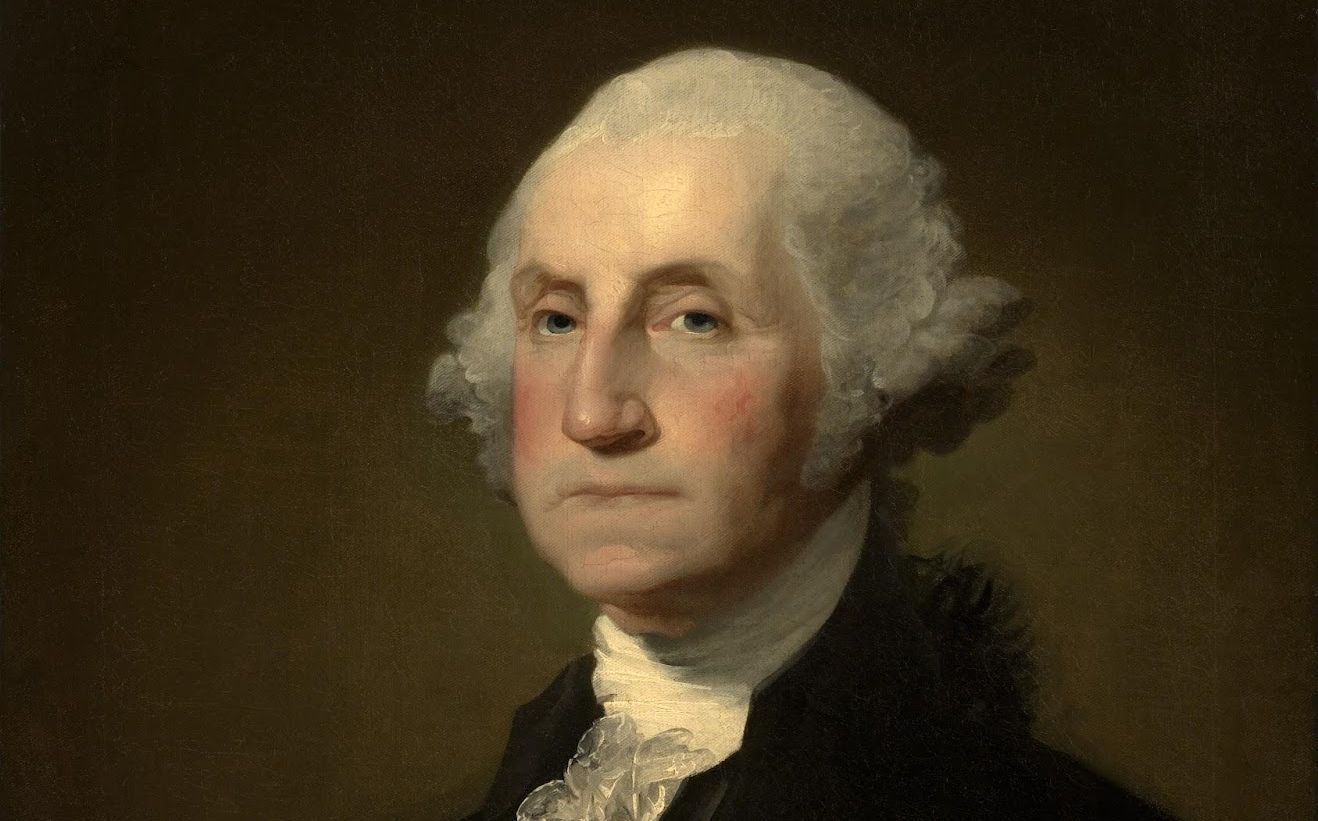
George Washington’s resume was certainly impressive: 1st President, Commander-in-Chief of the Armed Forces, and tactical mastermind. However, there’s another noteworthy activity that is often overlooked by history books— George Washington owned and ran a commercial whiskey distillery from his home in Mount Vernon.

Think about it: Is there any liqueur more likely to lift your "spirits" (see what we did there?) than a fine malt whiskey personally distilled by the "Father of Our Country"? The thousands of tourists that visit Mount Vernon every year seldom forget to visit the distillery.

7
Have you seen this dog?

Image: Joe Caione

Picture this: You are putting out signs in your block trying to locate your beloved and recently lost dog. All of a sudden you receive an unexpected call, informing you that they have found your dog and that it is currently in the care of none other than the President of the United States!

In all honesty, that’s not exactly how the story went, but it’s a true testament to George Washington’s honor and etiquette. According to historians, a little fox terrier named Lila was found by Continental Army troops behind American lines after the Battle of Germantown in 1777. After learning from the dog’s collar that she belonged to an enemy soldier, Washington ordered for the dog to be returned to her rightful owner, with a note assuring him that she was unharmed and safe.

8
Fancy a cold one?

Image: Drew Beamer

George Washington was not the only Founding Father adept at brewing alcoholic beverages. The great city of Boston proudly boasts an iconic beer brand named after Samuel Adams , paying homage to the beer-brewing past of this Founding Father.

There’s another bit of fun trivia regarding "Samuel Adams Beer": If you’ve ever enjoyed a pint of this delicious beer, you probably saw Adams raising a beer glass on its label. However, some theorize that the man depicted in the logo might actually be fellow patriot Paul Revere. Having said that, there’s no solid evidence to back this up, other than the fact that both revolutionaries looked a little similar.

9
Thomas Jefferson’s magical cookbook

Image: Hayden Walker

As mentioned earlier, Thomas Jefferson was a bit of a foodie. Granted, he would look at us in complete bewilderment if he heard us call him a "foodie," but it’s safe to say he loved good cuisine. Besides bringing French fries to our country, every American should salute and pay tribute to the 3rd President for yet another culinary jewel: Mac and cheese.

Again, we should clarify that the recipe Jefferson brought wasn’t exactly the one you would find in a box of Kraft. However, he would often serve his dinner guests macaroni pasta, paired with a cheese sauce that closely resembles the dish we know and love today. It’s believed that Jefferson’s delighted guests helped popularize this creation, which would eventually become one of America’s favorite meals.

10
Benjamin Franklin purposely misspelled "Pennsylvania"

Image: Adam Nir

We’ll end with a remarkably smart mistake that came from a remarkably smart man. Benjamin Franklin was behind some of the earlier forms of currency in the United States. After moving to Philadelphia in 1723, he became involved in printing money, which had only recently started circulating around Pennsylvania. As the great inventor that he was, Franklin added some remarkably clever ways to bypass counterfeiters and help differentiate his bills from possible fakes.

One of the smartest—and possibly simplest—features Franklin introduced was purposely misspelling the word "Pennsylvania" on his bills. After all, such a blatant and evident mistake would immediately inform anyone that this bill came from Franklin’s own hand.

History History 4 min read

After the golden spike

The driving force that built America: 12 milestones in railroad history

Image: jean52Photosstock

Today, we often take trains for granted, but that wasn’t always the case! The history of railroads is deeply intertwined with American history, shaping the nation’s growth every step of the way. Rail lines helped modern cities blossom, boosted trade across the country, and allowed Americans to explore even the most remote corners of the nation . From the first tracks to today’s massive freight industry, join us as we journey through 12 pivotal moments that defined America’s railroad legacy.

1
First tracks laid

Image: Tim Wildsmith

Date: 1827

The Baltimore and Ohio Railroad (B&O), chartered in 1827, became America’s first common carrier railroad. Construction began the following year, introducing horse-drawn carriages on iron rails. While rail lines existed before, most were privately owned or served specific industries.

2
Tom Thumb’s race

Image: K. Mitch Hodge

Date: 1830

Shortly after the establishment of the B&O’s chartered line, American industrialist and inventor Peter Cooper designed the first American steam locomotive, Tom Thumb , to convince the railroad’s owners to adopt steam power. To prove the technology’s potential, a race was organized between the locomotive and a horse. Although the horse won after Tom Thumb suffered a mechanical failure, the demonstration successfully proved the superiority of steam engines, marking a turning point in railroad history.

3
The railroad boom

Image: Museums Victoria

Date: 1840s to 1850s

With the rise of steam locomotives, railroads expanded rapidly, connecting major cities and driving unprecedented economic growth. By 1850, the U.S. had built 9,000 miles of railroad tracks . These rail lines played a crucial role in transporting goods—particularly agricultural products—to markets, revolutionizing commerce and travel across the country.

4
First transcontinental charter

Image: Alex Boyd

Date: 1862

The Pacific Railroad Act, signed by Abraham Lincoln in 1862, authorized the construction of the first transcontinental railroad, connecting the East and West coasts. The legislation empowered the Union Pacific and Central Pacific Railroads to undertake this monumental task, offering land grants and bonds to support the project. Beyond its technological significance, the act also demonstrated the federal government’s commitment to uniting the nation, fostering economic growth, and solidifying the country’s infrastructure.

5
Driving the Golden Spike

Image: Matt Benson

Date: 1869

On May 10, 1869, the Union Pacific and Central Pacific Railroads met at Promontory Summit, Utah, completing the first transcontinental railroad. During the ceremony, a 17.6-karat golden spike was ceremonially driven in —then promptly removed to prevent theft. This historic achievement connected the nation like never before, reducing cross-country travel time from months to days and forever transforming America's transportation landscape.

6
Standardized time zones

Image: Igor Savelev

Date: 1883

Another transformative effect of railroad expansion and faster travel times was the need for standardized timekeeping. To address the confusion caused by varying local times, the system of time zones was introduced. This not only revolutionized rail scheduling but also transformed travel and commerce across the country, helping synchronize operations nationwide and ensuring greater efficiency and coordination.

7
The Pullman revolution

Image: Jennifer Latuperisa-Andresen

Date: 1867

In 1867, George Pullman introduced the first luxury sleeper cars, offering passengers unmatched comfort on long-distance journeys. Pullman cars featured plush seating, fine dining, and exceptional on-board service, elevating the railroad experience to new heights. These innovations set a standard for first-class travel that extended far beyond railroads.

8
Connecting the South

Image: Oxana Melis

Date: 1870s

During the American Civil War, railroads were a strategic asset, enabling the swift movement of troops and supplies. After the war, Southern rail development played a key role in integrating the South into the broader U.S. economy, facilitating trade and mobility in the Reconstruction era. The Southern rail network expanded from 11,000 miles in 1870 to 29,000 miles by 1890, breaking the region's isolation and fostering economic growth.

9
Electric rail debuts

Image: Museums of History New South Wales

Date: 1888

Richmond, Virginia, became the site of America’s first electric streetcar system, forever revolutionizing urban transit. The system had a significant impact on the emerging electric trolley industry, with its design serving as a model adopted by many other cities. This shift marked the beginning of modern public transportation, transforming urban landscapes and mobility for generations to come.

10
The Golden Age

Image: Marco De Luca

Date: Early 20th Century

From 1900 to 1930, railroads dominated American transportation, carrying nearly all freight and passengers . During this period, innovations in track systems, signaling, and luxury amenities reinforced their status as the nation’s lifeblood. The industry thrived unchallenged until the rise of automobiles and airplanes reshaped the transportation landscape.

11
Amtrak takes over

Image: Jan Canty

Date: 1971

During the post-World War II economic boom, airlines and Interstate highways pushed many railroads out of business . As passenger rail declined, the U.S. government created Amtrak to sustain intercity travel, consolidating struggling private lines into a national service. While freight rail remained strong, Amtrak preserved passenger trains’ legacy, ensuring their continued role in America’s transportation system.

12
Modern freight titans

Image: Akshay Nanavati

Date: Present Day

Finally, we've reached the last station on our railroad journey! While the railroad landscape has drastically changed since its golden era, trains remain a vital backbone of the country’s economy. Freight railroads now dominate the industry, transporting over 1.7 billion tons of goods annually. The U.S. boasts one of the world’s largest and most efficient freight rail systems , transporting everything from coal to electronics and continuing to drive commerce and industry.

History History 4 min read

America through songs

10 songs that preserve America’s greatest stories

Image: Anmol Arora / Chris Robert

Music has always been a way for Americans to reflect on their shared history, both struggles and victories. From heartfelt anthems about our most beautiful landscapes to bittersweet reflections on failed dreams, there is no shortage of melodies that place America at their center. Hum along with us through these 10 unforgettable songs that blend art and history, making us reflect on what was gained and lost along the way.

1
"Born in the U.S.A." – Bruce Springsteen

Image: Jose Antonio Gallego Vázquez

This 1984 anthem by "The Boss" captures the struggles of Vietnam veterans returning to a country that seems to have forgotten them. While often mistaken as a patriotic rally cry, its verses lament economic hardship and societal neglect.

Springsteen's raw vocals and gritty lyrics juxtapose against its rousing melody, making it one of America’s most misunderstood yet powerful songs. The album was a commercial success, solidifying its place in rock history.

2
"American Pie" – Don McLean

Image: Priscilla Du Preez

Released in 1971, McLean’s eight-minute epic recounts America’s loss of innocence following Buddy Holly’s death in 1959. The song’s nostalgic tone and layered storytelling made it an instant classic, with its complex lyrics referencing a myriad of cultural and political events of the 1960s.

While the song is known for its deep, almost cryptic lyrics, McLean chose not to explain its meaning for many years, allowing listeners to interpret it as they saw fit. When asked about the song’s significance, McLean humorously responded, "It means I never have to work again."

3
"We Didn’t Start the Fire" – Billy Joel

Image: Matt C

Another hit song known for its rapid-fire, name-dropping lyrics, "We Didn’t Start the Fire" chronicles major American events and figures from 1949 to 1989—a true history lesson packed into a pop hit.

According to Joel, the idea came from a conversation with a younger friend, who suggested that no era could have been more chaotic than the one they were living in. This prompted Joel to write a song demonstrating that every era has its own share of turmoil, showing that there’s nothing new under the sun.

4
"Take Me Home, Country Roads" – John Denver

Image: Mario Scheibl

This 1971 ode to West Virginia celebrates the beauty of rural America. Denver’s tender vocals and vivid imagery perfectly capture the essence of small-town life and evoke a sense of nostalgia for simpler times.

In the chorus, Denver depicts the roads to West Virginia as a guiding force, leading him back to a place where he truly belongs, affectionately calling the state "Mountain Mama." The song has since become a symbol of Appalachian pride, performed at countless events, and even adopted as an official state anthem.

5
"Paradise" – John Prine

Image: Albert Hyseni

Prine’s 1971 bittersweet ballad tells the story of a small Kentucky town destroyed by coal mining. Although Prine was from Chicago, his family hailed from the Appalachian region, specifically the town of Paradise, Kentucky.

Large-scale strip mining from the 1950s to the 1970s wiped Paradise off the map, as thousands of acres were stripped. During that time, regulation of strip mining was minimal at best, and even today, the environmental and societal scars of this practice are still visible.

6
"Casey Jones" – Mississippi John Hurt

Image: Tim Wildsmith

"The Ballad of Casey Jones," also known as simply "Casey Jones," is a traditional American folk song about railroad engineer Casey Jones and his death while driving the train he was operating.

Although Mississippi John Hurt isn’t the only artist to cover this subject, his version neatly and beautifully sums up the story of this almost forgotten American hero — a heroic railroad engineer who sacrificed his life to save passengers during a train crash in 1900.

7
"Pancho and Lefty" – Townes Van Zandt

Image: Cemrecan Yurtman

Though originally written by Van Zandt, Willie Nelson and Merle Haggard’s 1983 rendition made this tale of two outlaws iconic. It tells the mysterious story of Pancho, a legendary gunslinger betrayed by his partner Lefty.

One reason the song remains so enduring may be its open-ended lyrics, which invite listeners to imagine the untold parts of the story. Plus, who doesn’t love a song about outlaws on the run in the good old days?

8
"The Night They Drove Old Dixie Down" – The Band

Image: Rick Lobs

This 1969 song tells the story of a Confederate soldier reflecting on the fall of the South during the Civil War. Its deeply human perspective makes it stand out, resonating with empathy on the subjects of war and its aftermath.

One of the group's most successful songs, its carefully crafted lyrics bring an overwhelming human sense of history, reminding us of the suffering of those who were quickly forgotten after the war.

9
"Pastures of Plenty" – Woody Guthrie

Image: Samantha Sheppard

This 1941 song tells the story of Dust Bowl migrants seeking work in California. Guthrie's soulful lyrics seek to capture their resilience amid poverty and displacement.

Written as a tribute to these migrant workers, the song evokes the world described in John Steinbeck’s The Grapes of Wrath . Curiously, the tune is based on the ballad "Pretty Polly," a traditional folk song from the British Isles that was also popular in the Appalachians.

10
"Wabash Cannonball" – Roy Acuff

Image: Paul Arky

An anthem of railroad culture, "Wabash Cannonball" follows the predicaments of a mythical train of the same name. There are many theories about the origin of "The Wabash Cannonball." Some believe it originated in American hobo culture, serving as a "death coach" that appeared at the death of a hobo to carry his soul to its reward.

Another theory suggests the song is based on a popular tall tale about Cal S. Bunyan, Paul Bunyan's brother, who supposedly constructed a railroad so the train could travel so fast it arrived at its destination before it even departed.

Explore more American facts

Choose your favorite category!

General
General

As American as apple pie—the very best America has to offer!

Culture
Culture

Delve into the astounding richness of American lore.

Geography
Geography

Hop in and explore vast and diverse American landscapes.

History
History

Discover the key moments that shaped the United States.