Culture Culture 6 min read

GAME CHANGERS

Discover 10 Of The Most Iconic & Successful American Products!

Image: Mike Petrucci

In this global and modern marketplace we live in, the products a nation makes almost act as ambassadors, showing the wonders of their countries of origin to the rest of the world. In that regard, America is no exception. Quite the contrary: Many of the world’s most cherished products were created in our country, and they are excellent representatives of what it truly means to live in America.

We have selected ten of the products that showcase all our ingenuity and proudly display the wonders of the American dream. Enjoy!

1
iPhone

Image: Bagus Hernawan

We’ll start with a game changer . On January 9, 2007, Apple founder Steve Jobs took the stage at the Macworld convention in San Francisco and announced "We're going to make some history together today". During the unveiling of the very first iPhone in 2007, Jobs was fully aware of how innovative his new product was , but he couldn’t have possibly imagined the scale of the technological revolution that was brought forward by the iPhone.

Perhaps the most groundbreaking aspect of the iPhone was its seemingly simple design: it effortlessly combined a cell phone and an iPod (another technological marvel in its own right), and it also added internet connectivity and browsing capabilities. To this day, Apple is still considered at the forefront of smartphone innovation, regularly releasing new groundbreaking iPhone models.

2
Air Jordans

Image: Flow Clark

Few brand logos are as instantly recognizable as Nike’s iconic "Swoosh". However, in 1985, Nike decided to raise the bet and create another groundbreaking logo that simply showed the silhouette of basketball legend Michael Jordan doing what he does best. And with this, the legend of the Air Jordan, probably the most iconic basketball shoe in history, was born.

Nike designed these shoes for Michael Jordan’s time with the Chicago Bulls and released them to the public in 1985. Since the release of the Air Jordan I, the "Jumpman" logo has graced over 35 different iterations of these quintessential shoes, with absolutely no signs of stopping.

3
Big Mac

Image: Brett Jordan

In 1967, in the city of Uniontown, Pennsylvania, a small McDonald’s restaurant debuted a new burger, which featured two beef patties, pickles, minced onions, and a slightly mysterious "special sauce". It was only a year later that this local burger was added to the menu of all McDonald’s in the United States, where it would become the company’s undisputable flagship product . At that moment, the legend of the Big Mac was born.

It might surprise you to learn that such an iconic burger actually had two previous names that failed with the public: the "Aristocrat" and the "Blue Ribbon Burger". It received its first and final name from Esther Rose, a 21-year-old McDonald’s advertising secretary. The Big Mac has become such an international icon , featured in almost every country around the world, that economists use what is known as the "Big Mac index" to survey a nation’s inflation based on the price of a Big Mac there.

4
Coca-Cola

Image: Maximilian Bruck

In 1885, when Colonel John Pemberton started selling the first version of its iconic drink from his drugstore in Columbus, Georgia, he advertised Coca-Cola in many different ways: first, as the "temperance drink", a non-alcoholic beverage that the growing temperance movement could enjoy, and then as a miraculous patent medicine that could provide the cure to many diseases. Little did he know that, almost 140 years after its invention, Coca-Cola would become a product that needs no introduction.

Coca-Cola is one of the most famous non-alcoholic beverages, available in practically every single country around the world. Not only that, it is the very first drink of its kind, having inspired thousands of different cola drinks since its commercialization. However, no one was ever close to copying its distinctive flavor, and probably no one ever will: its highly classified formula is one the most well-kept secrets in history.

5
Budweiser

Image: Blake Guidry

There is a reason why Budweiser is still known by its timeless nickname "The King of Beers". No beer is as instantly associated with America as Budweiser is, and with good reason: First bottled in 1876, Budweiser is the very first national beer brand in the United States.

Curiously, you might have noticed that in some places outside the United States, Budweiser is marketed as "Bud" . The reason behind this is an actual legal battle between the American Budweiser and Budweiser Budvar, a brewery located in the Czech city of České Budějovice, from which the name "Budweiser" comes.

6
Gillette

Image: Brett Jordan

How could a man named "King Camp Gillette" not live in history? Such a flamboyant and unique name truly demands to be remembered and, luckily, this essential personal care brand has proudly kept this name alive for over 120 years now, forever remembered after King C. Gillette’s groundbreaking and bestselling safety razor model.

The start of the 1900s saw Gillette’s safety razor jump to popularity, thanks to its groundbreaking design that allowed disposable blades that could be easily changed. This design quickly became the industry standard, particularly after the U.S. Army started issuing Gillette shaving kits to American soldiers.

7
Starbucks

Image: USAMA AKRAM

Who knew that a secondary character from Herman Melville’s "Moby Dick" would one day inspire one of the biggest coffee companies in the world? Millions of white Starbucks cups decorated with their green logo satiate the caffeinated needs of thousands of people every day.

It is a rather daunting task to choose Starbucks’ most iconic drink: We could go for its seasonal "Pumpkin Spice Latte", or for its refreshing, ice-cold "Caramel Frappucino". Whichever drink is your favorite, you’ll know you are enjoying one of the world’s most famous products whenever you see that iconic twin-tailed mermaid in your cup.

8
Wilson Football

Image: John Torcasio

There’s probably no need to say that Wilson is the quintessential brand associated with American football: After all, the company has been the official game ball supplier for the NFL since 1941. That means that Wilson's Football has been featured in practically every single Super Bowl since the very first one was held in 1967.

You probably already know that this iconic ball has a name: Every single Wilson ball used by the NFL has been known by the nickname "The Duke" , which has been emblazoned on every football since 2006. This is in reference to Wellington Mara, the legendary owner of the New York Giants who helped arrange the business connection between Wilson and the NFL.

9
Ben and Jerry’s

Image: Hybrid Storytellers

The story of this ice cream company is the story of two lifelong friends . Since their childhood in Merrick, New York, Ben Cohen, and Jerry Greenfield had always been inseparable, so much so that they decided to jointly open an ice cream parlor in Burlington, Vermont in 1978. Nowadays, the names of these two friends have truly become indivisible, as they both contribute 50% to the name of one of the most famous ice cream brands in the world.

Ben & Jerry’s is particularly famous for their unique flavors and the chunks of sweet treats mixed with their ice cream. The company also holds its beloved annual "Free Cone Day" event, held in all "Ben & Jerry’s" parlors across the world.

10
Louisville Slugger baseball bats

Image: Diana Polekhina

We’ll end this list with an American classic . In 1855, woodworker J. F. Hillerich opened his shop in Louisville, Kentucky. According to the company legend, Hillerich’s 17-year-old son Bud slipped away from the shop to watch the Louisville Eclipse baseball team play. It was during this game that the team's star batter, Pete "Louisville Slugger" Browning, broke his bat, so Bud invited him to his father’s shop to make him a new one.

The rest is history: Browning and the rest of the team adored the new bat, and the company started manufacturing their now-iconic "Louisville Slugger" bats. Just like with Wilson footballs, these bats are synonymous with "America’s favorite pastime". In case you are curious, you can learn more about this American icon by visiting the Louisville Slugger Museum & Factory, where you can also discover the world’s largest baseball bat!

General General 5 min read

The Soundtrack of Our Lives

Plop, plop, fizz, fizz! Remember these 10 catchy jingles?

Every brand aims to create a logo, slogan, or jingle that is instantly recognizable and remains iconic over time. But the truth is, not all of them succeed. However, some brands have developed jingles so catchy that, from the moment you hear them, you can't help but sing along. We're talking about those ads that we can still easily remember, even though they were created years ago. Do any come to mind? So, get ready to relive 10 of these unforgettable jingles that stuck in our minds!

1
"I don't want to grow up"- Toys 'R' Us

Image: Liao Je Wei

No kid on Earth doesn't love toys, and Toys 'R' Us knew this too well. Their unforgettable commercial, "I Don't Want to Grow Up, I'm a Toys 'R' Us Kid," is proof of that. Remember it? Of course, you do!

Launched in the 1980s, this ad was a hit. The kids' voices repeatedly stating, "I don't want to grow up," immediately brings the brand's name to mind. In addition to the catchy line, the commercial also showcased a wide variety of toys available in stores, which are—of course—the reason why kids never want to grow up!

2
"Give me a break"- Kit Kat

Image: Abi Schreider

Kit Kat has successfully tied itself to the joy of taking a break , thanks in large part to its iconic jingle: "Give me a break, give me a break, break me off a piece of that Kit Kat bar!" Feeling like dancing?

We're sure you've caught yourself singing this line more than once in everyday life. The infectious tune has lived rent-free in our minds since the ‘80s when the commercial first debuted. In it, chefs, firefighters, builders, office workers, and people from all walks of life—including children—hold up a Kit Kat bar, smiling and dancing as they politely ask for their well-deserved break.

3
"Plop plop fizz fizz"- Alka-Seltzer

Image: Ksenia

For a jingle to stand out, it needs to be both consistent and effective . And Alka-Seltzer's most famous jingle nailed it perfectly.

"Plop, plop, fizz, fizz, oh what a relief it is!" is the catchy jingle that hit the radio in 1953. With two simple words, it shows us how to use the product: "Plop" (drop the tablet into a glass of water), "fizz" (watch it dissolve), and then, relief!

Later adapted for TV, the commercial featured Alka-Seltzer's mascot, Speedy , who explained the product's benefit: "Those speedy bubbles relieve your upset stomach and headache fast! For acid indigestion alone, Alka-Seltzer Gold."

4
"Sometimes you feel like a nut"- Almond Joy and Mounds

Image: Jessica Loaiza

As brands offer a variety of products, they often look for unique ways to differentiate each one, creating distinct commercials to highlight the essence of each product. But Almond Joy and Mounds, produced by the same company, did the opposite: they were united in the same commercial.

"Sometimes you feel like a nut, sometimes you don't. Almond Joy's got nuts, Mounds don't." Not only is it funny and catchy, but it's also crystal clear: although the bars look similar, there’s one key difference. Yep, the nuts ! So, which one is your favorite?

5
"Mmm Mmm Good" – Campbell's Soup

Image: Kelly Common

Sometimes, the simplest approach is the most effective, right? And that was demonstrated by Campbell's when it launched its famous jingle "Mmm Mmm Good." You've probably heard it!

What's the expression you use when you taste something that's delicious? That's right: Mmm! The canned soup brand exploited this universal expression to the fullest by adding it to its commercials and consistently evoking a cozy, homey vibe. By doing so, they connected the product with the kind of food we all prefer: homemade .

6
"My Bologna Has a First Name"- Oscar Mayer

Image: Aneta Voborilova

Almost everyone knows how to spell " bologna ," and that's largely thanks to Oscar Mayer's catchy 1973 jingle. Remember that one?

In the famous commercial, a young boy sings, "My bologna has a first name, it's O-S-C-A-R/ My bologna has a second name, it's M-A-Y-E-R/ Oh, I love to eat it every day, and if you ask me why, I'll say/ 'Cause Oscar Mayer has a way with B-O-L-O-G-N-A." The catchy tune and playful lyrics became a cultural phenomenon, making the brand name synonymous with the product. It was a highly effective marketing tactic!

Kids and adults alike couldn't stop spelling out this fun jingle, which still plays in our minds to this day.

7
"Meow, meow, meow, meow…"- Meow Mix

Image: Matheus Queiroz

Sometimes, we wish our pets could talk to us. It's a fantasy explored by many cartoons and some famous movies. But if your cat could talk, what would it ask for as its favorite meal? Hard to guess, right? Meow Mix, the cat food company, decided to give us an answer.

In its 1970s commercial, a kitten "sings" the catchy jingle, "Meow, Meow, Meow, Meow, Meow, Meow, Meow," while the visuals clearly show that the cat is asking for Meow Mix's delicious food. Associating the very sound of the animal with the brand name was a very clever move!

8
"Like a Good Neighbor"- State Farm

Image: Tierra Mallorca

You know a jingle is good when it's been around for decades , and that's the case with the iconic "Like a good neighbor, State Farm is there" from the well-known insurance company.

The jingle was written in 1971, and since then, it has become one of the most recognized jingles in commercial history.

Sung warmly and softly, the jingle conveys the idea that the insurance company will always be there for the customers, whatever they need, providing a sense of security and reliability.

9
"I'm A Big Kid Now"- Huggies Pull-Ups

Image: Jimmy Conover

Cuteness is a great way to connect with an audience, and Huggies, the famous diaper and pull-up brand, understands this perfectly.

And the proof of this is its iconic jingle, "I'm a big kid now!" This line represents the transition from diapers to training pants and the start of the potty training process.

The commercial, which debuted in 1992, features a young child proudly telling his parents about all the things he can do now that he's a "big kid." It highlights the joy and pride of this milestone for both toddlers and their parents. The jingle was a big hit and became one of the brand's most famous.

10
"I'm Lovin' It" - McDonald's

Image: Road Ahead

When you think of McDonald's advertisements, it's impossible not to remember the legendary "I'm Lovin' It."

Although it's newer than some other jingles on this list, "I'm Lovin' It" debuted in 2003 and quickly became an iconic part of the McDonald's brand. Along with the catchy "pa ra pa pa pa" hum, the jingle successfully linked the brand with the pleasure of enjoying a delicious burger.

Thanks to its simplicity and positive vibes, the jingle became a crucial part of the brand's identity and is etched in the memory of many Americans.

General General 6 min read

12 American inventions that shaped modern life

Image: National Gallery of Art, CC0, via Wikimedia Commons

From life-saving medical developments to groundbreaking technologies, American inventors have transformed how we live, work, and communicate. These innovations not only transformed everyday life but also ignited the flame of progress across the globe. Let’s dive into our selection of the 12 inventions that best reflect American creativity and ingenuity.

1
The light bulb

Image: Zach Lucero

Delivering electricity to the masses was one of the greatest technological advances in human history. The mid-1800s saw great competition in this area, as inventors around the world raced to invent their own electric light. The first filament bulb was developed by British inventor Warren de la Rue in 1840, but his use of a platinum filament made it expensive and impractical.

A few years later, Joseph Swan in the UK and Thomas Edison in the US each independently invented bulbs using cheaper elements. However, Edison received a patent on his bulb in early 1880, slightly before Swan. The light bulb, an invention that quickly reached every home, revolutionized life around the world, led to the development of the electrical grid, and set the stage for our modern electricity-dependent society.

2
The telephone

Image: viarami

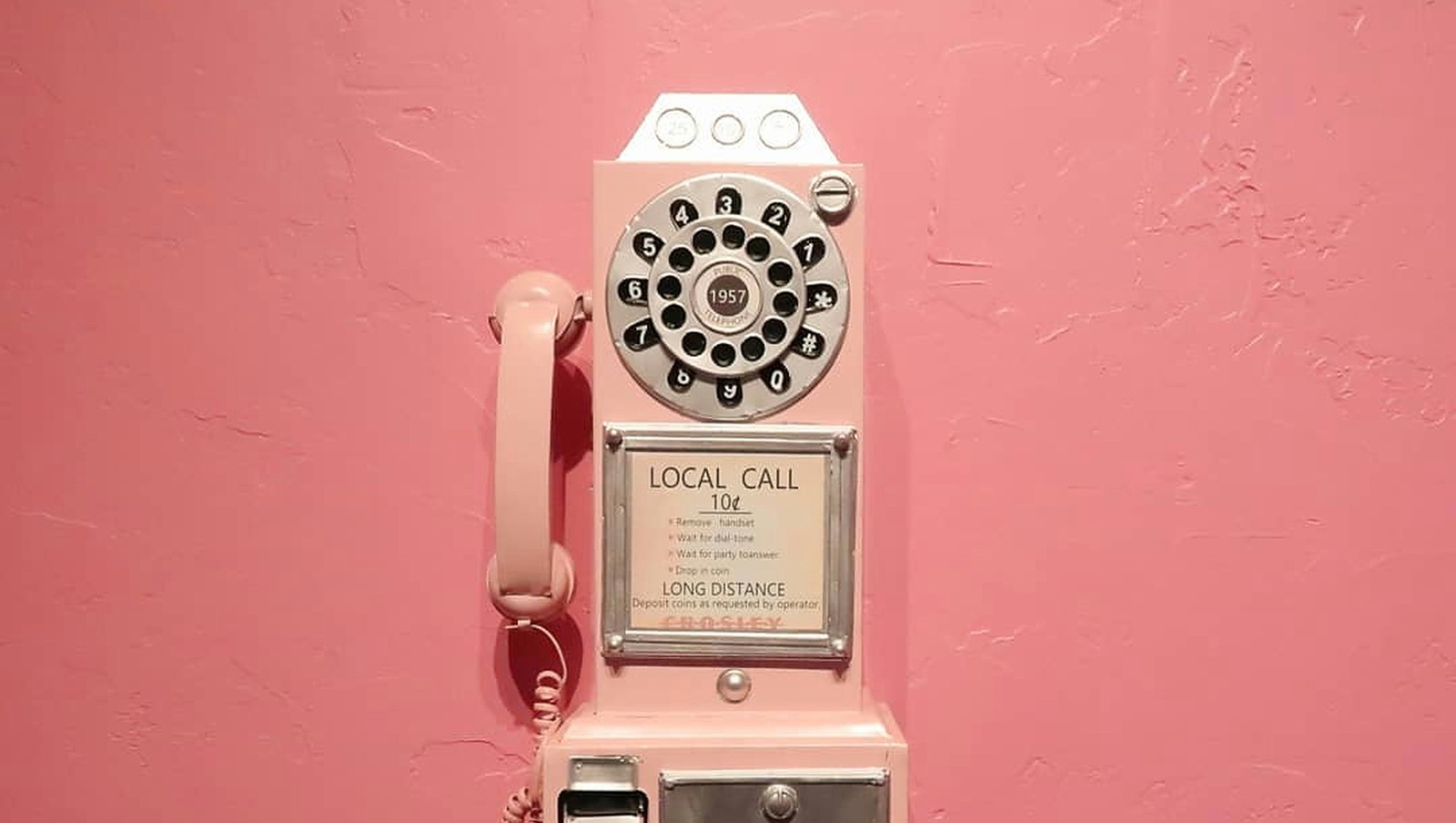
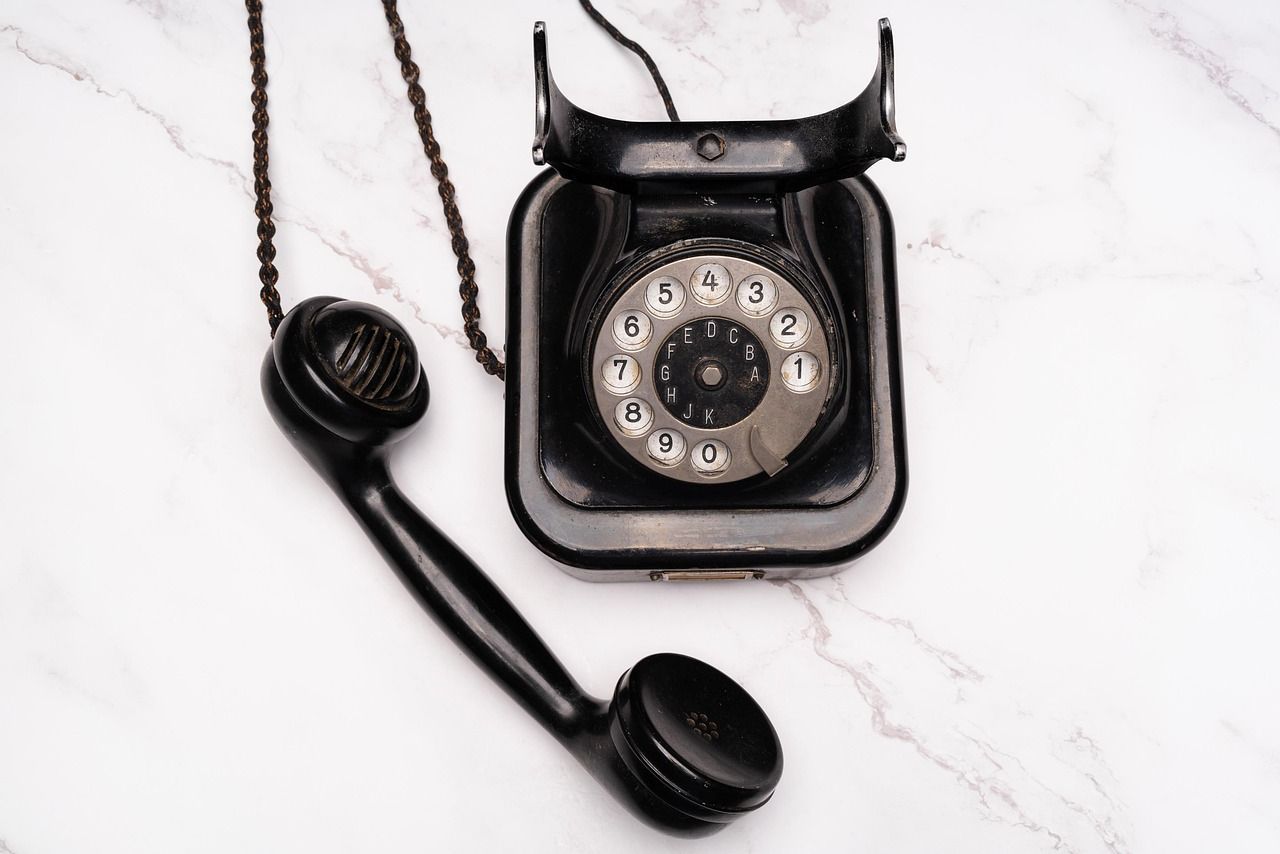
In this modern era of emails and text messages, it can be hard to appreciate that the telephone was once revolutionary. The telegraph, the phone’s predecessor, only transmitted brief written messages. The telephone, however, allowed people to speak with one another in real time over long distances.

Inventor, scientist, and engineer Alexander Graham Bell invented the electric telephone in 1876. Although Bell was Scottish-born and also lived in Canada, he patented his invention in the US . The telephone was a game-changing technology that improved business efficiency, enabled instant global connections, and allowed emergencies to be reported as they occurred. It effectively made the world more connected and faster-paced.

3
The fire escape

Image: Lewis J Goetz

When we think of US inventions, the first things that come to mind are usually the light bulb or the telephone. But did you know that the modern fire escape was also a US innovation? Designed in 1887, this simple yet life-saving invention changed building safety forever.

In the late 1800s, fires were devastating cities across America. One woman, Anna Connelly, saw this horror up close and decided to do something about it. She designed an external iron staircase system, and in 1887, she patented it. At a time when women couldn’t even vote, Anna’s invention became a safety standard in most major cities, saving thousands of lives. Today her name is barely known, but next time you see a fire escape, remember the woman who made them possible.

4
The cash register

Image: Di Du

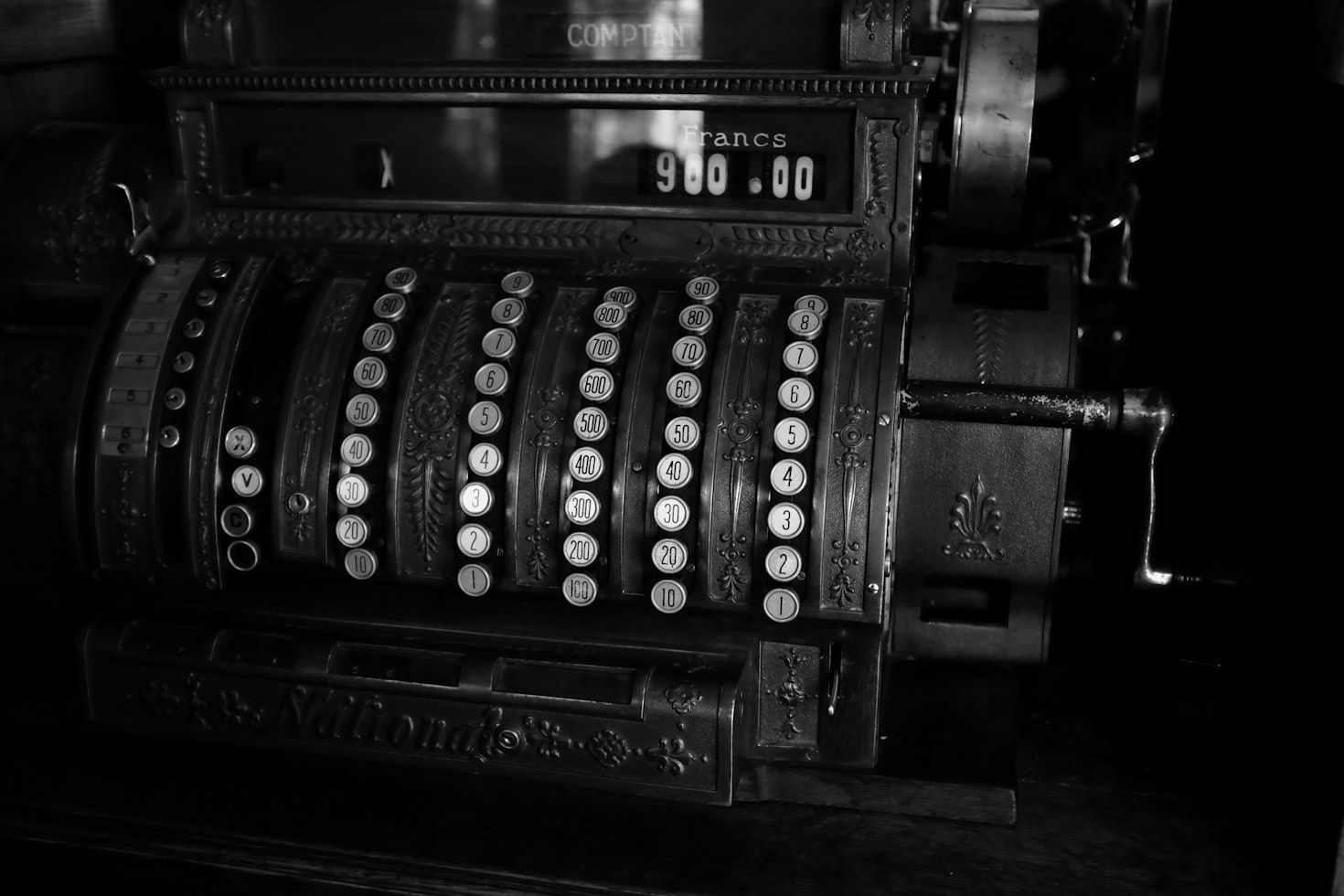
The first mechanical cash register for calculating and recording sales transactions was invented by saloonkeeper James Ritty following the American Civil War. He was looking for a way to stop cashiers from stealing, and finally patented his novel invention in 1879.

When a transaction was completed, Ritty's Incorruptible Cashier made a bell sound, and the amount was displayed on a large dial on the front of the machine. During each sale, a paper tape was hole-punched so the vendor could keep track of sales. Pretty ingenious, don’t you think?

5
Interchangeable parts

Image: gayulo

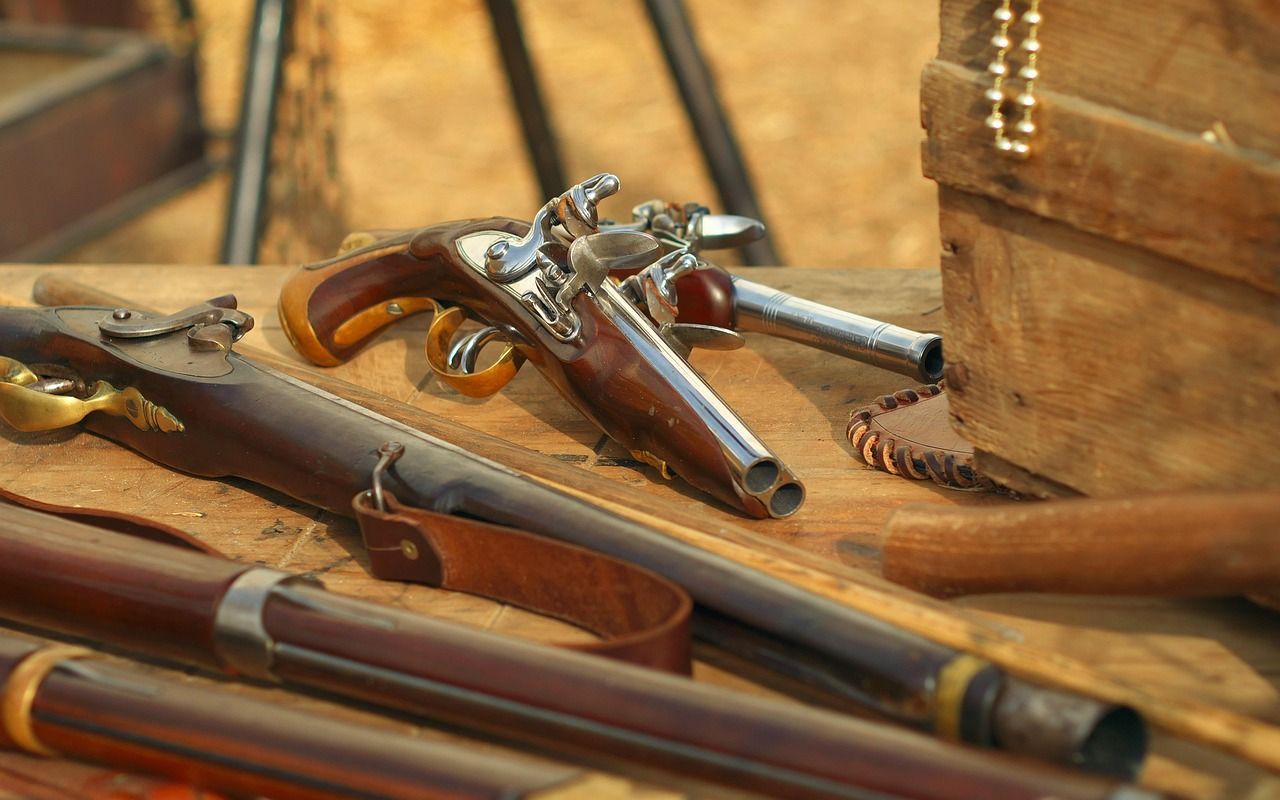
Standardized interchangeable parts for machines are now a staple of modern manufacturing, but it’s not a new idea. There’s evidence that thousands of years ago, ancient Carthage used them to build warships, and ancient China applied the idea to crossbows. Many centuries later, French experimentation with interchangeable musket parts inspired Thomas Jefferson.

In 1798, President George Washington and his Congress finally agreed to Jefferson’s idea of implementing the technology in America. They awarded a contract to Eli Whitney—the inventor of the cotton gin—to supply the government with 20,000 muskets. Whitney recognized the potential of developing firearms with identical parts and mechanisms. His advancements in interchangeable parts laid the foundation for modern manufacturing, enabling improved quality control, reduced costs, and faster production of goods.

6
The assembly line

Image: Public domain, via Wikimedia Commons

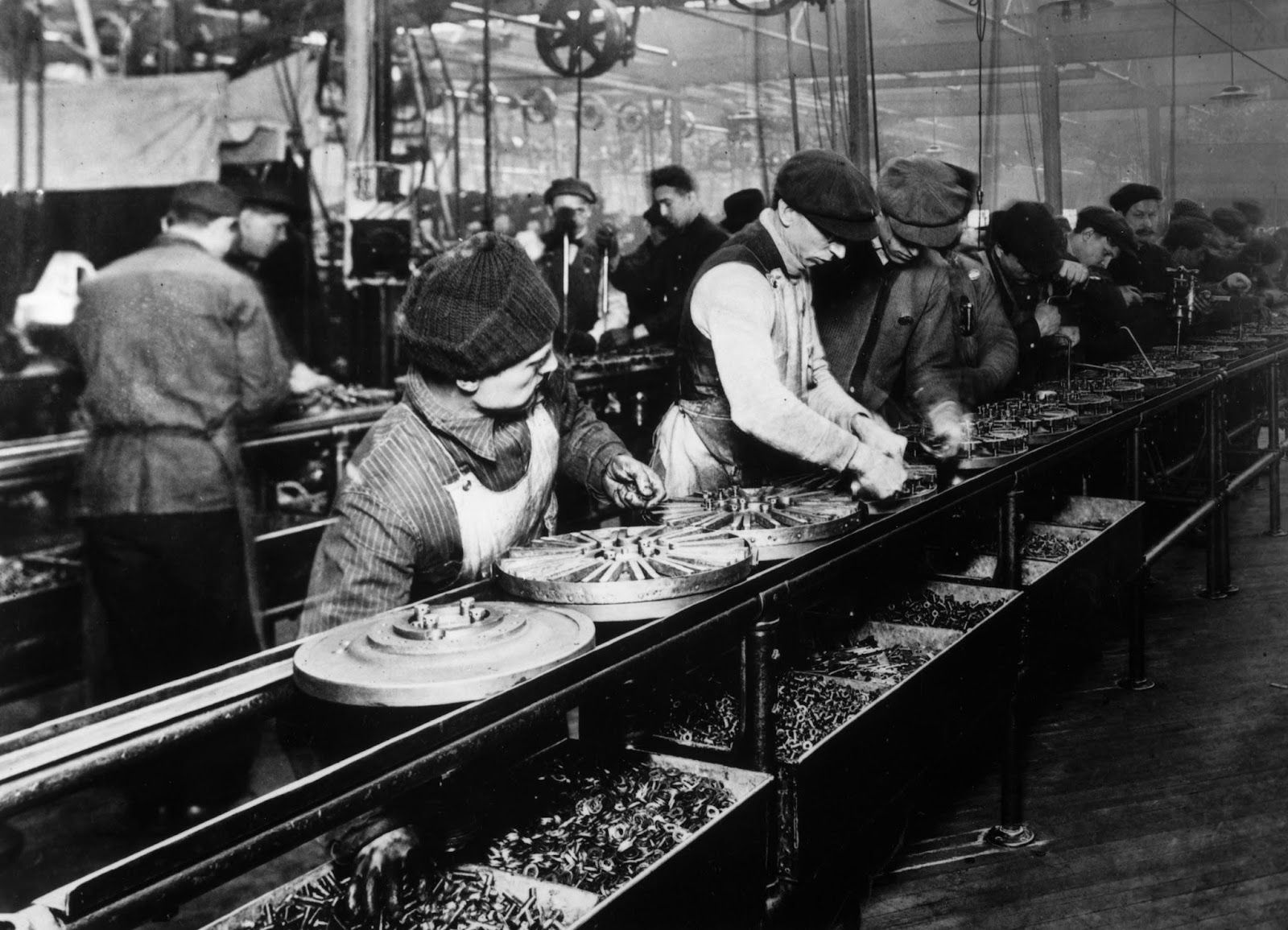
For most of human history, manufactured goods were custom-made. Every model of a machine, piece of clothing, or tool was unique. The development of interchangeable parts was a huge advancement, but automobile manufacturer Ransom Olds took it a step further with the assembly line in 1901. By standardizing and automating many aspects of manufacturing, uniform goods could be created faster and at lower costs.

Olds’ vehicle, the Oldsmobile Curved Dash, became the first mass-produced car . His method was later adopted and perfected by Henry Ford, whose moving assembly line for the Model T in 1913 revolutionized manufacturing. Today, the assembly line combines human labor and automation to produce nearly every mass-market product on Earth. Many experts agree it was one of the most significant technological developments of the 20th century.

7
The airplane

Image: Wright Brothers, Public domain, via Wikimedia Commons

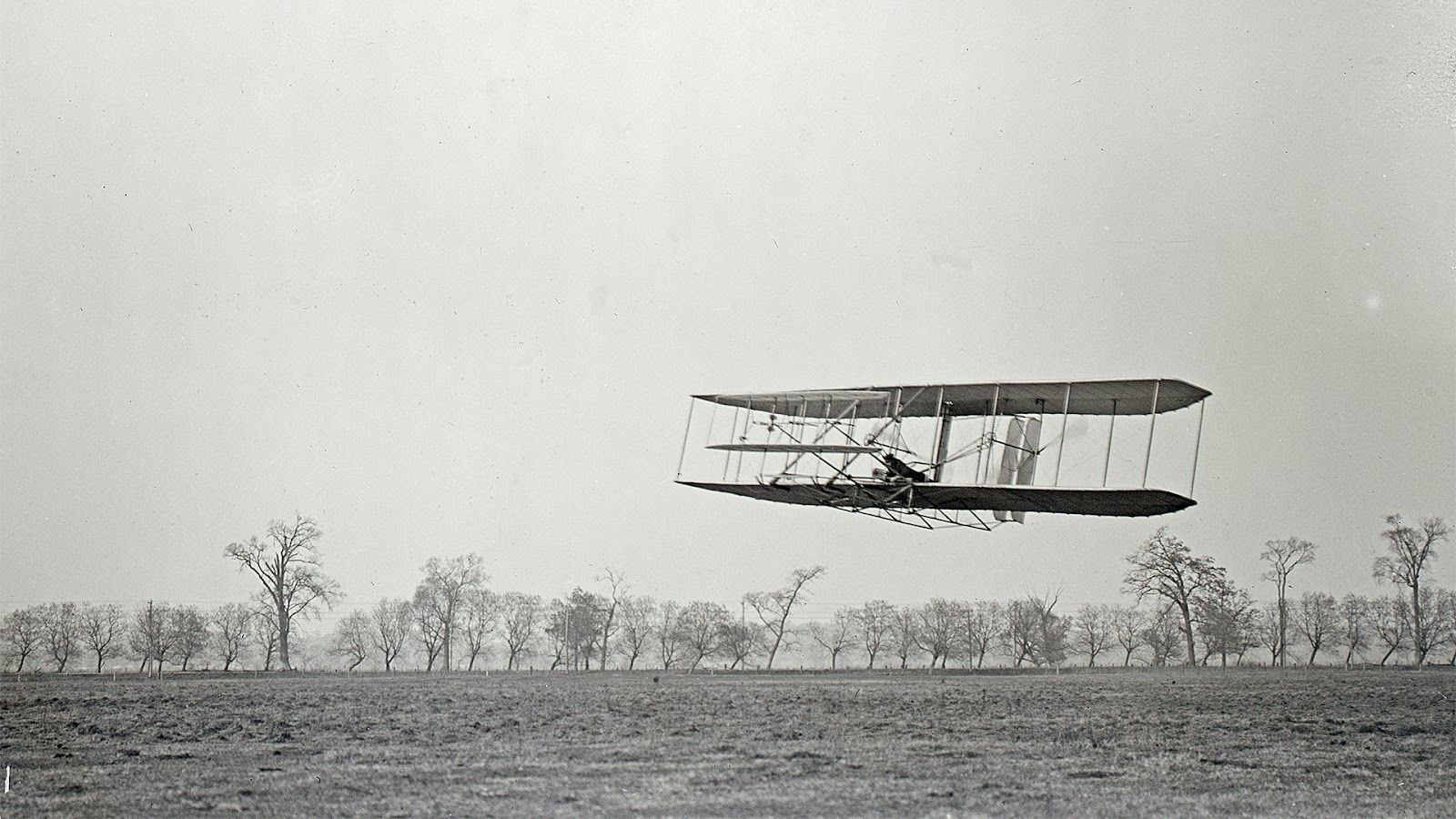
People have always observed birds and insects and dreamed of flying. The Greeks told the story of Icarus and Daedalus, who crafted wings of wax and feathers; Leonardo da Vinci sketched and theorized flying machines, but it wasn’t until 1903 that the airplane became a reality in Kitty Hawk, North Carolina.

Wilbur and Orville Wright experimented with aeronautics for several years before achieving their successful first flight. A few years later, airplanes were first used in warfare. Within seven decades, their technology evolved and took us to the Moon. Today, the airplane is an indispensable technology that allows us to transport goods and people around the world in no time.

8
GPS

Image: Stanislav Kondratiev

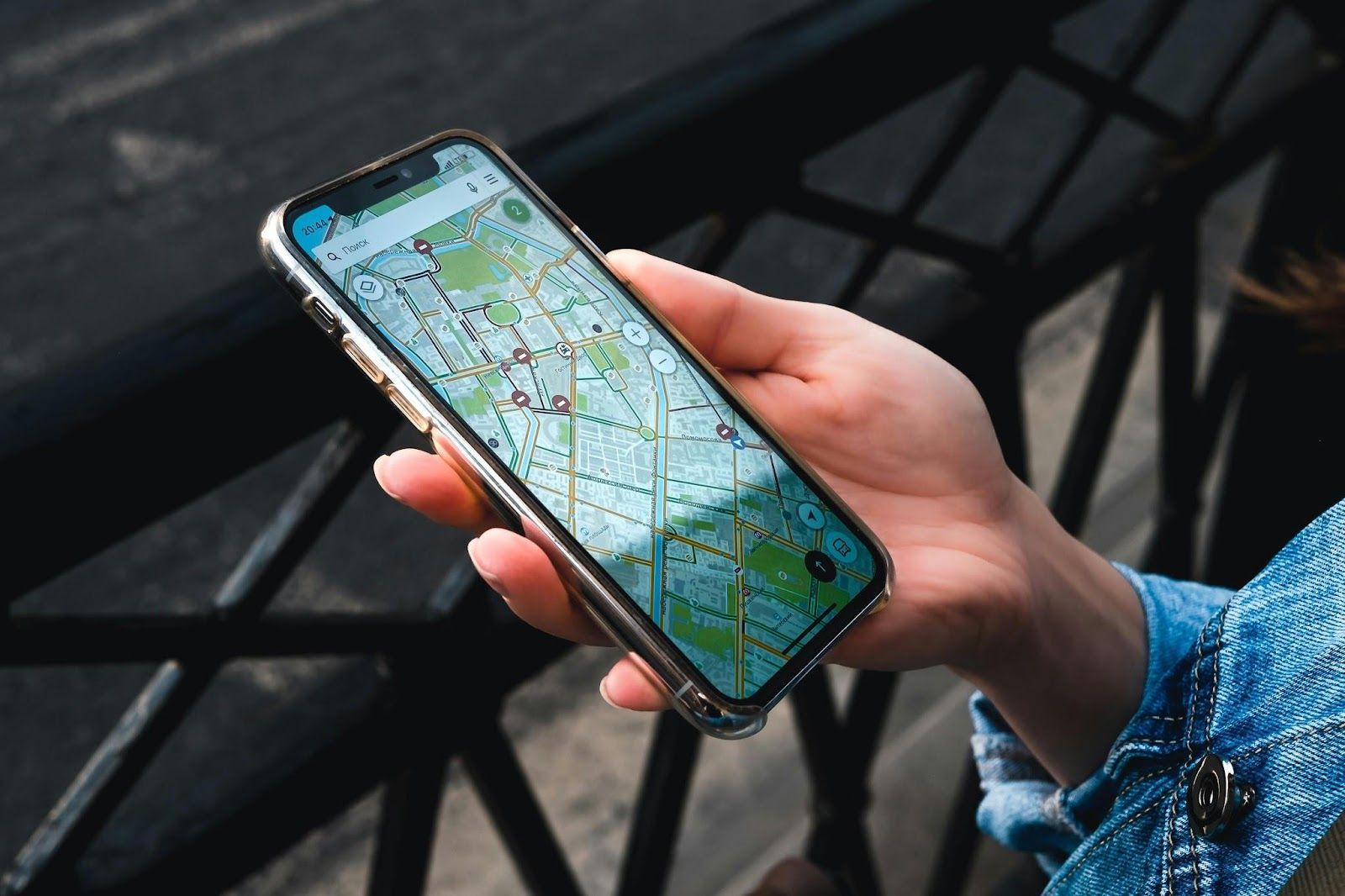
It’s hard to imagine life without GPS—but do you know how it began? When the Soviet Union launched Sputnik in 1957, American physicists realized they could track the satellite’s radio transmissions using the Doppler effect.

Soon after, the U.S. military began testing and launching the Navstar Global Positioning System satellites. In 1983, President Ronald Reagan approved GPS for civilian use, and by the start of the 21st century, GPS devices were widely available in vehicles and mobile phones . Today, GPS is an essential technology for business, travel, and military operations.

9
Personal computers

Image: Unidentified U.S. Army photographer, Public domain, via Wikimedia Commons

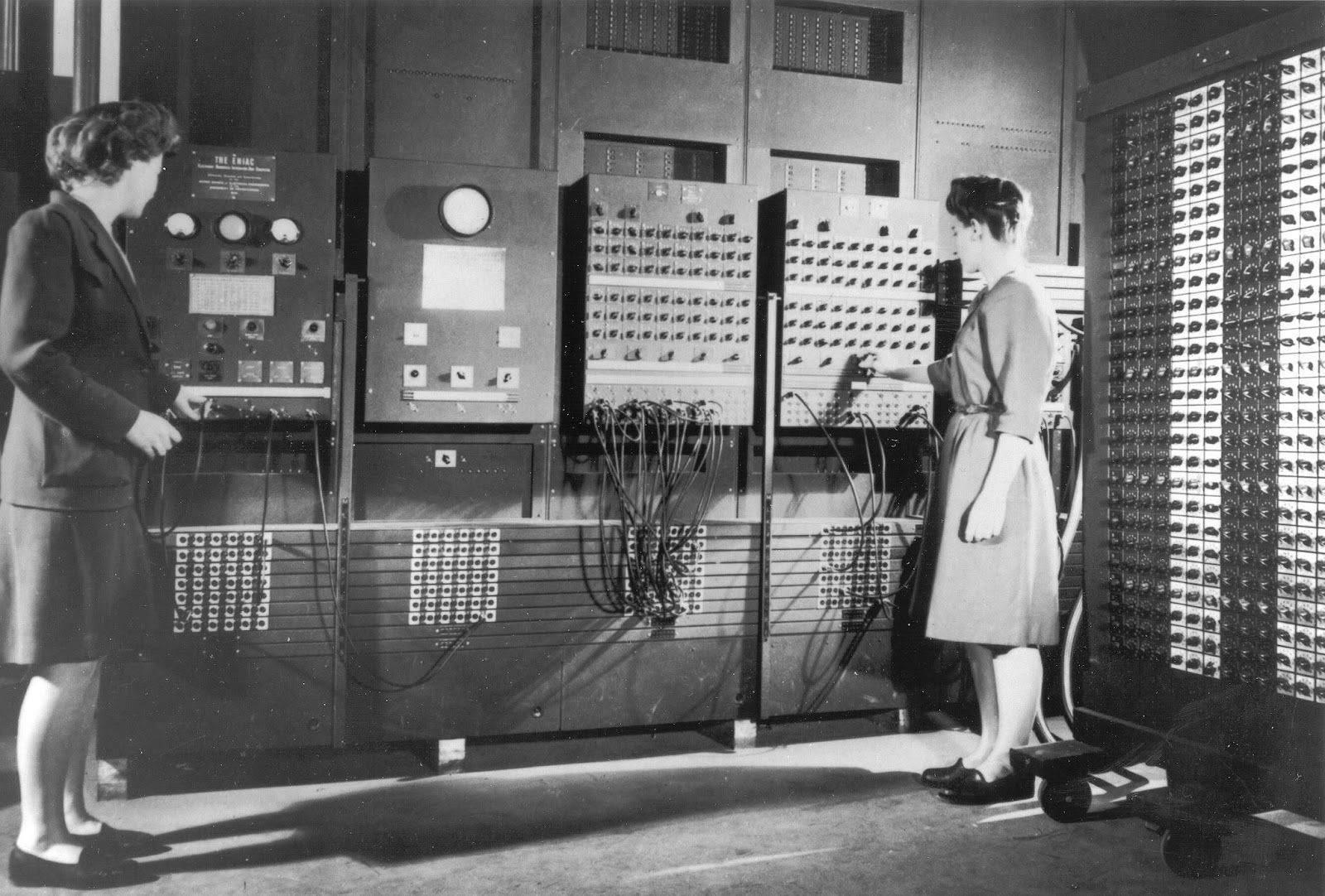
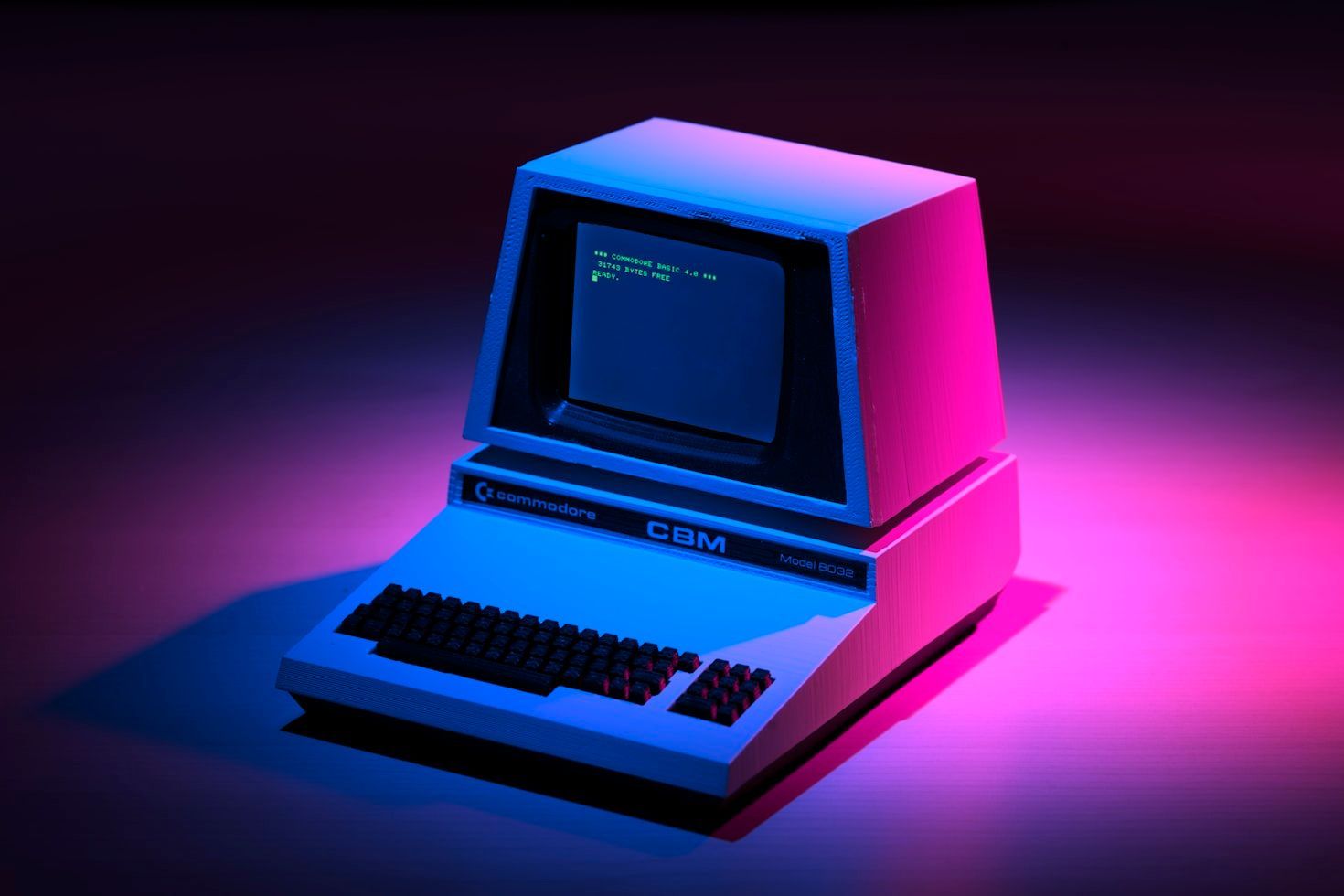
The first electronic general-purpose computer, ENIAC, was built in 1946 at the University of Pennsylvania. It occupied 1,800 square feet of floor space and weighed 30 tons. At the time, imagining a consumer-grade computer small enough to fit in every home would have seemed impossible. Yet, just one generation later, the impossible became reality.

Over the years, computers became smaller, cheaper, and more powerful than the ENIAC’s creators could have imagined. In 1971, John Blankenbaker developed the first PC, the Kenbak-1. Fifty years later, it is clear that personal computing has fundamentally shaped the modern world.

10
The internet

Image: Lorenzo Herrera

Revolutionary technologies such as the wheel, the internal combustion engine, the telephone, and the airplane have forever changed the way we travel and communicate. The internet is no exception; it gives people access to the entirety of human existence with just a few clicks.

In 1969, computer scientists at the Advanced Research Projects Agency (ARPA) created the first network connecting labs at UCLA and Stanford. Over time, their network expanded, connecting anyone with a device. Since then, the internet has revolutionized the way human beings access resources and share information.

11
E-mail

Image: Brett Jordan

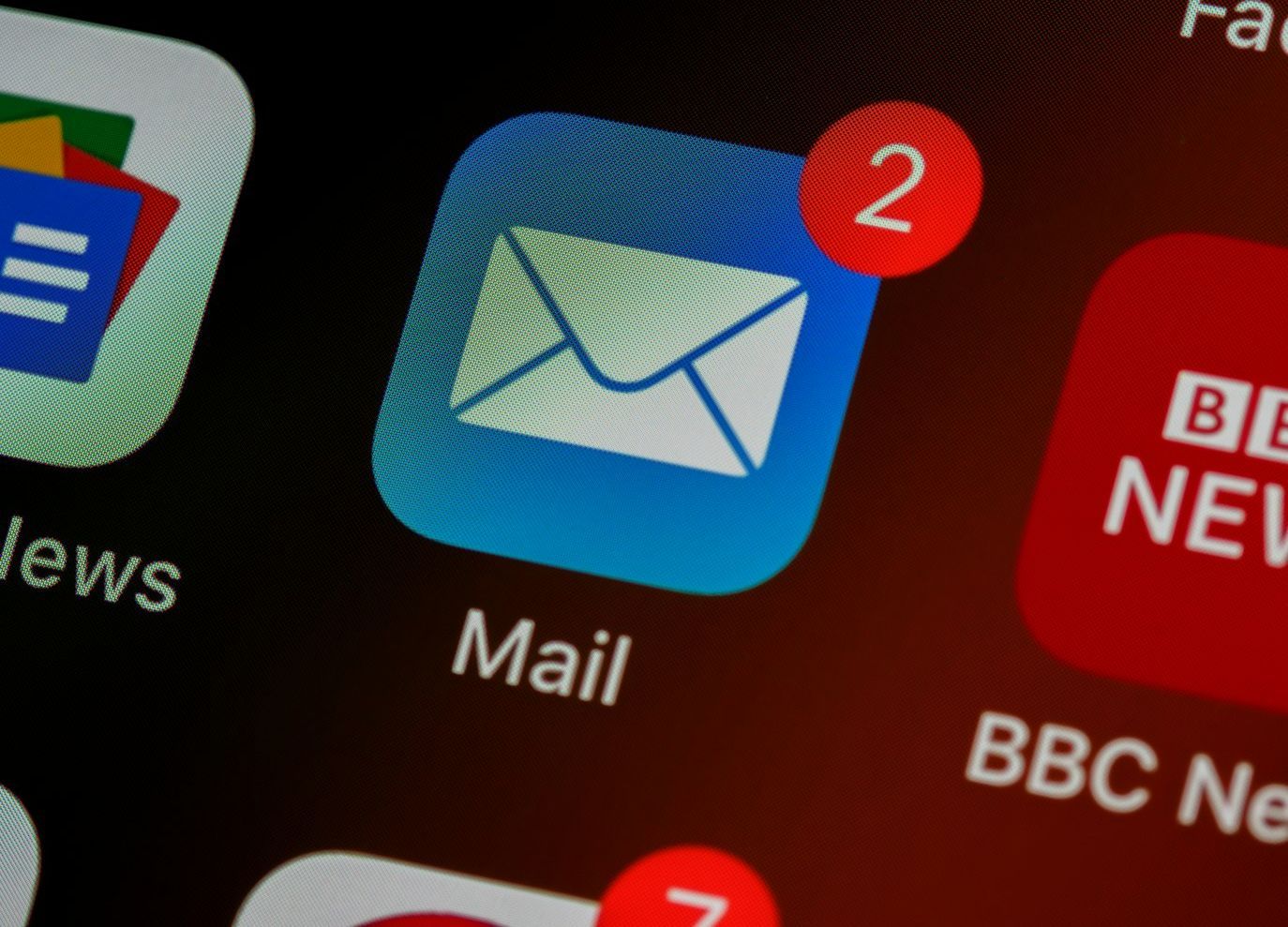
After the personal computer and the Internet, we only needed to invent a modern method of sending messages and letters to each other. The Advanced Research Projects Agency Network, known as ARPANET, sent the first email in 1971. Within five years, the majority of exchanges within the ARPANET community were via email.

With the introduction of attachments in the early 1990s, electronic mail became the fastest and easiest way to send information from point to point. By the start of the 21st century, email enabled people around the world to communicate quickly and inexpensively, and the technology quickly became one of the primary tools for global communications.

12
Magnetic resonance imaging

Image: MART PRODUCTION

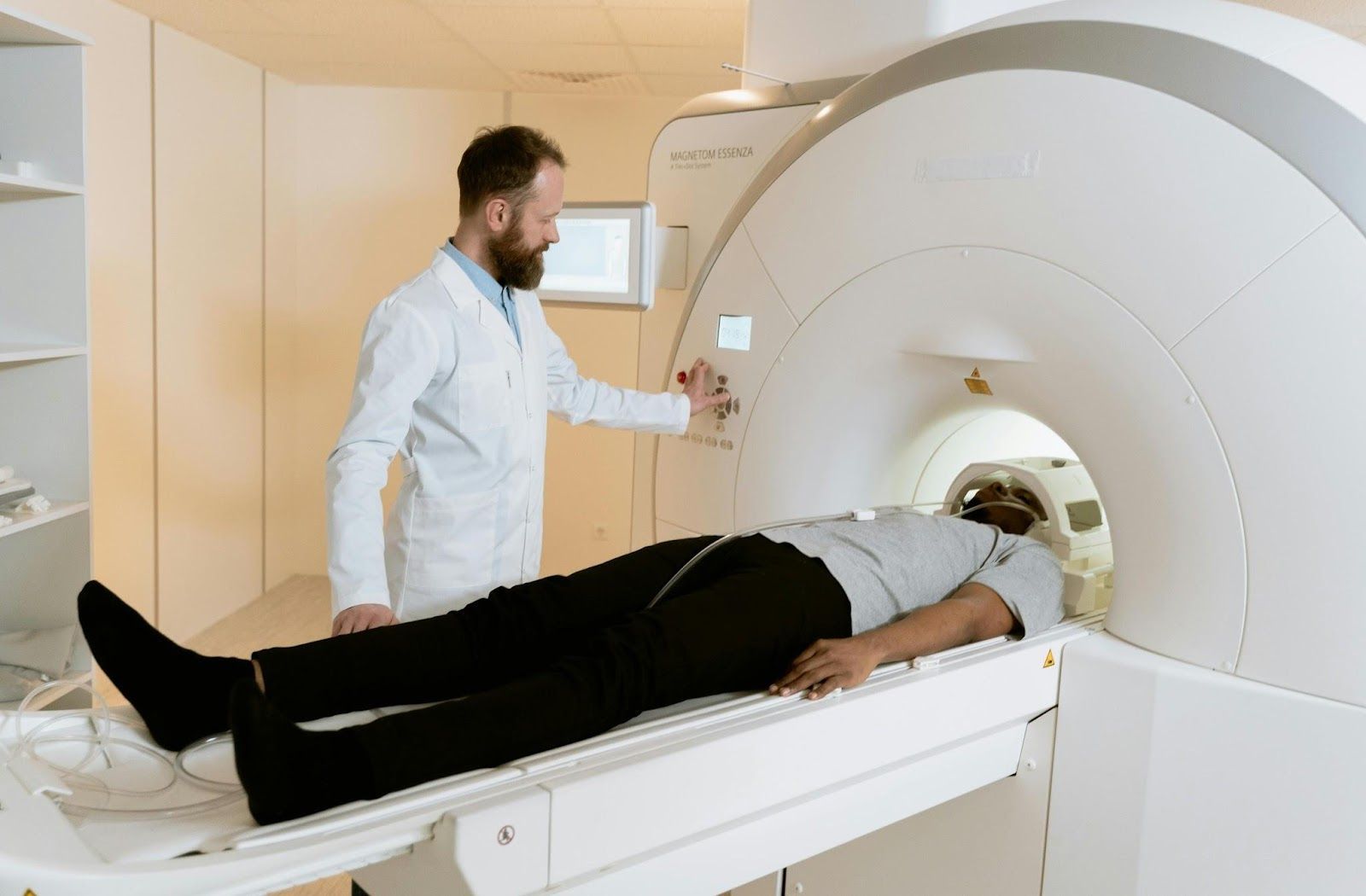
The impact of the MRI machine on medicine is invaluable. The principles behind nuclear magnetic resonance (NMR) have been known since at least the end of World War II. Yet, two researchers in the late 1960s and early 1970s recognized the potential of this technology to revolutionize medicine forever.

American chemist Paul Lauterbur and physician Raymond Damadian separately experimented with NMR in scanning for cancer cells. After publishing the promising results of their experiments, a patent was filed. By 1977, the first full-body scanner was developed. Since then, millions of lives have been saved by the MRI machine. For his contributions, Lauterbur was awarded the Nobel Prize in Physiology or Medicine in 2003.

Explore more American facts

Choose your favorite category!

General
General

As American as apple pie—the very best America has to offer!

Culture
Culture

Delve into the astounding richness of American lore.

Geography
Geography

Hop in and explore vast and diverse American landscapes.

History
History

Discover the key moments that shaped the United States.