General General 4 min read

Have your cake and eat it too!

Beyond American Pie: these local desserts are worth trying!

Image: Kenrick Mills

Americans have a sweet tooth that has led to the creation of some of the most delicious desserts in the world. And yes, while the American pie reigns supreme when it comes to pointing a national favorite, there are many other contenders that are nearly as popular as this classic apple treat. The following ten desserts offer just a small taste of the rich American cookbook, yet they manage to represent quite well the sweet cravings preferred in this country. If you haven’t tried some of these, we encourage you to give them a taste—they’re all delicious!

1
Cobbler

Image: Enrique Briseno

What’s not to love about a cobbler? It’s the perfect mix between tart and sweet. The popular choices include peach, apple, and blueberry, but other fruits like pears, and rhubarb, also make great options.

This popular dessert can range from tart to sweet depending on how much sugar is added to the fruit. Cobblers vary from more cake-like to crunchy, especially with the addition of oats for texture instead of flour.

2
Cheesecake

Image: Kelsey Todd

All hail the cheesecake! This amazing dessert comes in many varieties and flavors, from rich double chocolate decadence to fluffier and fruitier options . The cheesecake base also pairs wonderfully with other sweet treats, like brownies and pies, for extra richness.

While it may seem like a very contemporary dessert, the first cheesecakes were created as early as the 5th century B.C. on the Greek island of Samos, where a dessert was created from cheese, honey, and nuts.

3
Banana Pudding

Image: Nicole Winchel Brayton

Few fruits are better companions to creamy desserts than bananas. Their texture and sweetness blend perfectly with many other ingredients. The Banana Pudding is a layered mix of creamy banana custard, fresh bananas, wafer cookies, and whipped cream —a fluffy, chilled delight straight from the icebox.

The recipe for banana pudding first appeared in Good Housekeeping in 1888 and has been a beloved classic ever since, with good reason.

4
S’mores

Image: Jessica Ruscello

This quintessential camping dessert is a truly American creation. The simple concept of graham crackers, toasted marshmallows, and chocolate has become home to a variety of innovations, including the addition of peanut butter, caramel, and other ingredients.

The recipe for s’mores first appeared in a cookbook in the 1920s, when it was already gaining popularity among campers in the Boy Scouts and Girl Scouts of America. And if you’re nowhere near a campfire, you can make this classic treat in your own oven at home.

5
Lemon Squares

Image: Elena Kloppenburg

This yellow cousin of the brownie (more on that later) is perfect for anyone who loves tart and flaky treats. The most successful recipes include a buttery shortbread crust, a layer of deliciously tangy lemon curd, and a light dusting of powdered sugar.

Chilled in the fridge, lemon squares make an ideal summertime dessert to savor when the heat is overwhelming.

6
Frozen custard

Image: Tim Mossholder

Everybody knows custard, right? And, as tasty as it is, frozen custard is—even better for many people. This gourmet ice cream treat, made with eggs, cream, and sugar is specially celebrated in Milwaukee, Wisconsin—the so-called "Custard Capital of the World"—where it's sold more than anywhere else around the globe.

Because it contains much less air than other similar treats, frozen custard is thick, dense, and packed with flavor.

7
Key lime pie

Image: Nathan Lemon

Who doesn’t love key lime pie? This sweet and sour dessert originates from the Florida Keys. It consists of Key lime juice, condensed milk, and eggs, mixed into a creamy custard. The custard is poured into a buttery crust made from graham crackers and topped with sweet whipped cream. The acidic flavors of the limes provide a perfect contrast to the sweetness of the sugar and cream.

8
Gooey Butter Cake

Image: Olga Petnyunene

Gooey butter cake is an accurately descriptive name for this treat, a hallmark of the city of St. Louis. It’s a flat, dense cake made from wheat flour, butter, sugar, and eggs . The cake is traditionally garnished with powdered sugar and sometimes a few raspberries.

Sweet, rich, and firm, gooey butter cake was created in the 1930s by a baker who, while attempting to make a standard yellow cake, accidentally added too much sugar, butter, or shortening. Rather than discard the gooey, sticky batter, he decided to sell it—and customers couldn’t get enough.

9
Beignets

Image: Keesha's Kitchen

While this dish originated in France, America has made it its own. Beignets are squares of deep-fried pastry dough sprinkled with powdered sugar and traditionally served hot . These days, beignets are most commonly associated with the French Quarter of New Orleans, where they were declared the official state donut in 1986. These treats are often enjoyed alongside chocolate milk or café au lait.

10
Brownies

Image: NordWood Themes

Last but not least, another American favorite makes its entrance. These small chocolate cakes come in various forms, from thicker, fudge-like brownies to lighter, fluffier versions. Brownies are also perfect for pairing with other popular desserts, like ice cream and caramel sauce, and can include nuts or frosting. There’s even a "blonde" variation!

Brownies hold a special place in American culture, often associated with home-baked goods, school bake sales, and family gatherings. Everyone has a favorite type of brownie. What’s yours?
History History 3 min read

Words that made history

Yes, they really said that: 10 presidential quotes we can't forget

Image: Charly Álvarez

There's no doubt that words are powerful, and some have changed the world. For better or worse, some quotes by US presidents are forever inscribed in history books and the citizens' memory. From George Washington to JFK, join us in exploring 10 unforgettable quotes from our nation's leaders.

1
"The only thing we have to fear is fear itself"

Image: National Archives and Records Administration, Public domain, via Wikimedia Commons

Franklin D. Roosevelt, the 32nd president of the United States, delivered a phrase in his first inaugural address that would be remembered forever. On March 4, 1933, at the height of the Great Depression, he proclaimed, "The only thing we have to fear is fear itself," with the aim of inspiring a nation in crisis to embrace courage and hope.

2
"Ask not what your country can do for you…"

Image: Florida Memory

The Cold War, international tensions, and civil rights struggles were shaking the nation when John F. Kennedy delivered his unforgettable inaugural address on January 20, 1961. Calling on Americans to take personal responsibility and contribute actively to the nation, he gave one of the most famous lines in American history: "Ask not what your country can do for you—ask what you can do for your country."

3
"Speak softly and carry a big stick…"

Image: Pach Brothers, Public domain, via Wikimedia Commons

F.D. wasn't the only Roosevelt with memorable quotes. Before him, Teddy Roosevelt made his mark, but he was a bit blunter. The 26th president first said, "Speak softly and carry a big stick; you will go far" in a public speech in 1901. With that line, he described his approach to foreign policy, which later became known as "Big Stick diplomacy."

4
"A house divided against itself cannot stand"

Image: Alexander Gardner, Public domain, via Wikimedia Commons

Abraham Lincoln gave us iconic words even before becoming president. In 1858, while accepting the Illinois Republican Party's nomination for the US Senate, he declared, "A house divided against itself cannot stand." The Civil War had not yet begun, but the nation was already deeply divided. This powerful line helped elevate Lincoln's reputation, paving the way for his election as president in 1860.

5
"We choose to go to the Moon"

Image: NASA

As expected, John F. Kennedy appears more than once on this list. This time, with a phrase that would kick off one of the greatest achievements in US and human history: the moon landing. During a speech at Rice University on September 12, 1962, in Houston, Texas, he said: "We choose to go to the Moon in this decade and do the other things, not because they are easy, but because they are hard." And history proved him right.

6
"Mr. Gorbachev, tear down this wall!"

Image: Michael Evans, Public domain, via Wikimedia Commons

Ronald Reagan also gave the world memorable quotes, including this famous one addressed to Soviet leader Mikhail Gorbachev during a speech at the Brandenburg Gate in West Berlin on June 12, 1987. Two years later, the Berlin Wall was brought down by the citizens themselves.

7
"The buck stops here"

Image: Greta Kempton, Public domain, via Wikimedia Commons

Displayed in his office, Harry S. Truman had the phrase: "The buck stops here." After assuming the presidency following Franklin D. Roosevelt's death, Truman had to face critical decisions at the end of World War II. The famous line reflected his belief in taking personal responsibility for decisions rather than shifting blame.

8
"Liberty, when it begins to take root…"

Image: Jon Sailer

Washington shared this idea in 1785 in a letter to Alexander Hamilton, shortly after the end of the American Revolutionary War. In it, he clearly expressed his vision for the young nation, whose principles would be rooted in the power of liberty and freedom.

9
"If your actions inspire others to dream more…"

Image: Julielangford, Public domain, via Wikimedia Commons

John Quincy Adams, the 6th President of the United States, gave us one of the most inspiring quotes: "If your actions inspire others to dream more, learn more, do more, and become more, then you are a leader." Thus, he defined leadership as a moral responsibility, one that motivates and uplifts others.

10
"Happiness and moral duty are inseparably connected"

Image: Gilbert Stuart, Public domain, via Wikimedia Commons

In his 1796 Farewell Address, George Washington captured the guiding principles of his presidency with this phrase. For the first US president, fulfilling moral duties and, above all, acting with integrity were inseparable from true happiness.

History History 3 min read

The many faces of the flag

Our flag has changed 27 times: Explore its evolution

Image: Joshua Hoehne

The Stars and Stripes are now recognized around the world, but the US flag didn’t always look the way it does today. While the red, white, and blue colors have been there from the beginning, the design has changed about 27 times! And so have the rules for handling it. If you want to see what our flag looked like in the past, or learn more about the protocols and traditions surrounding it, keep reading!

1
1776

Image: Bureau of Engraving and Printing., Public domain, via Wikimedia Commons

During the American Revolution, the Grand Union Flag, also called the Continental Colors, was created to represent the colonies. It featured 13 alternating red and white stripes (symbolizing the original colonies), but instead of stars in the upper left corner like we see today, it displayed the Union Jack.

2
1777

Image: Bureau of Engraving and Printing., Public domain, via Wikimedia Commons

In 1777, following the Declaration of Independence, the Continental Congress adopted the first official flag of the United States. It featured 13 alternating red and white stripes, which still honor the original colonies today. Replacing the Union Jack, it introduced a new element that would be key for the rest of its history: 13 white stars set in a blue field, or canton, arranged in a circle to symbolize equality and unity among the states.

3
1795

Image: Nyttend, Public domain, via Wikimedia Commons

It wasn’t until 1795 that the flag changed again, when two more stars and two additional stripes were added to represent the recently admitted states of Vermont (1791) and Kentucky (1792). This version was the only US flag to feature more than 13 stripes and later became known as "The Star-Spangled Banner", since it was the very flag that inspired Francis Scott Key to write the poem that would later be the lyrics of the national anthem.

4
1818

Image: Michael Rivera, CC BY-SA 4.0 <https://creativecommons.org/licenses/by-sa/4.0>, via Wikimedia Commons

In 1818, the flag’s design changed once again. The 15 stripes were reduced back to 13 to permanently honor the original colonies. Five new states had joined the Union, bringing the total number of stars to 20. These stars were sometimes arranged in straight rows and other times in the shape of a large star, which earned this version the nickname "The Great Star Flag."

5
1912

Image: This image is a work by Wikipedia and Wikimedia Commons user Aktron.When reusing, please credit me as: Aktron / Wikimedia Commons. I would appreciate being notified if you use my work outside Wikimedia.More of my work can be found in my personal gallery.csen+/−csenmkplsr+/−, CC BY-SA 3.0 <https://creativecommons.org/licenses/by-sa/3.0>, via Wikimedia Commons

Each new state joining the Union meant one more star on the flag. In 1912, when New Mexico and Arizona were added, the number of states reached 48, so their stars also took their place. That year, President Taft issued an executive order setting the official proportions of the flag and specifying that the stars should be arranged in six horizontal rows of eight.

6
1960

Image: chris robert

The most recent design change came in 1960. After Alaska and Hawaii joined the Union in 1959, two more stars were added, bringing the total to 50. They were arranged in nine alternating rows of six and five stars, like the official flags you see displayed across the country today.

7
Flag time

Image: Jon Sailer

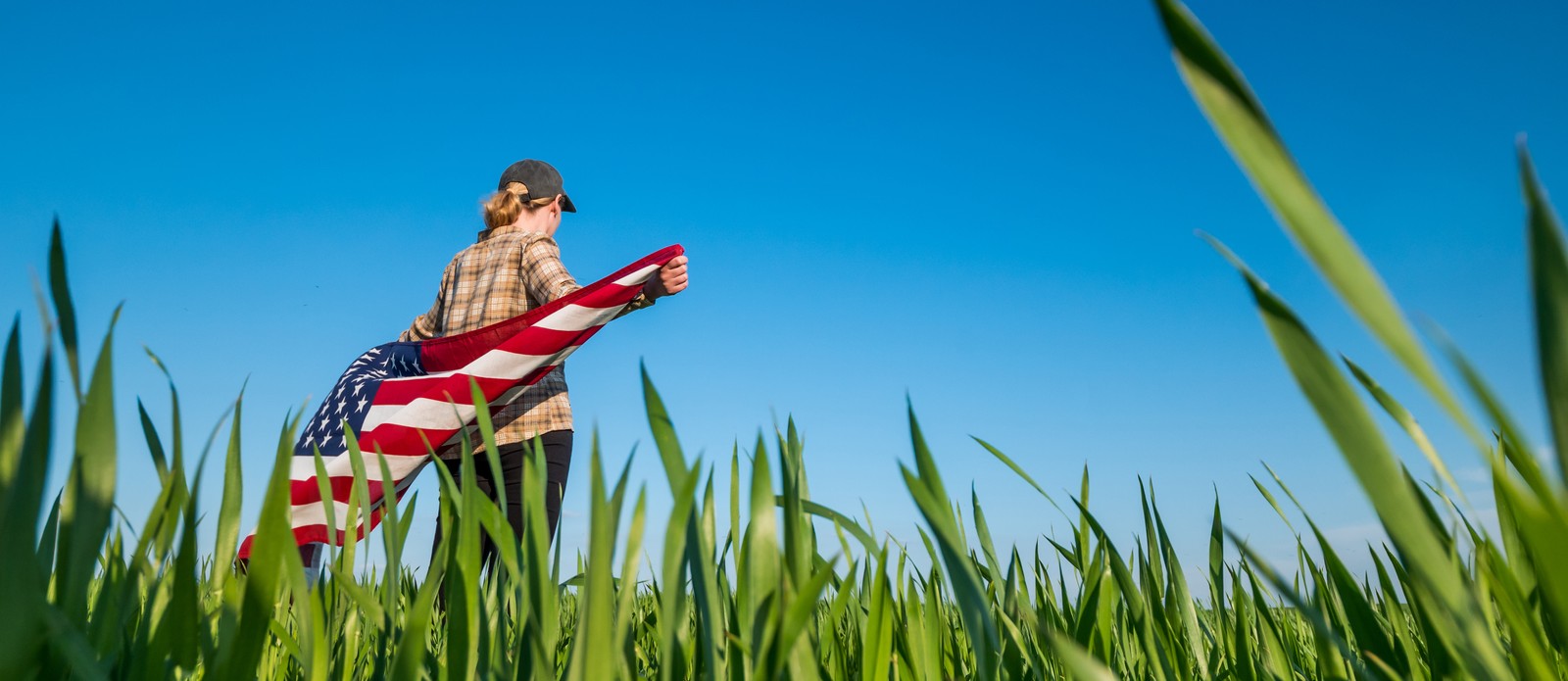
Beyond its official design, the US flag follows a set of protocols established over the years. One key rule specifies the time to display it: generally, the flag should be flown from sunrise to sunset. If displayed at night, it must be properly illuminated.

8
Weather conditions

Image: Anandu Vinod

The flag code doesn’t just set the time of day; it also indicates the proper weather conditions for display. According to the protocol, the flag should not be flown in bad weather, such as rain, snow, or storms, unless it’s an all-weather flag designed for such conditions.

9
Position

Image: Roger Starnes Sr

Of course, the flag must always have the blue canton in the upper left corner. But there are more rules for its position. When flown with other symbols, such as state flags, the national flag must be in the center and slightly higher. Additionally, if it needs to be lowered from the flagpole, the flag must never touch the ground.

10
Don'ts

Image: Alex Martinez

If you need to handle the flag, it’s important to know the proper way. But it's also crucial to know what not to do. Some of the key "don'ts" include never letting it touch the ground, avoiding creasing it, not writing or drawing on it, and one that might surprise many: don’t use it as clothing or decoration.

Explore more American facts

Choose your favorite category!

General
General

As American as apple pie—the very best America has to offer!

Culture
Culture

Delve into the astounding richness of American lore.

Geography
Geography

Hop in and explore vast and diverse American landscapes.

History
History

Discover the key moments that shaped the United States.