History History 5 min read

The American way

Baseball and BBQs: 10 iconic American pastimes that shaped the nation

Image: Leon Contreras

A baseball game under the summer sun, a weekend fishing trip, a barbecue at a family gathering—all of these activities are as American as apple pie. Our favorite pastimes tend to reflect the nation’s values and history, evolving and transforming over the years yet always retaining a part of their essence. Here are 10 iconic pastimes that have shaped life in the United States.

1
Baseball

Image: Chris Chow

Baseball isn’t called America’s favorite pastime for nothing. The heartbeat of American sports, it was already recognized as the national sport in the 19th century, when it originated as a blend of older bat-and-ball games.

Curiously, the first official baseball game on record didn’t take place in the United States but in our northern neighbor, Canada, which is often credited with creating the basis for most modern baseball rules. However, New York City clubs were responsible for further shaping the game into what it is today.

2
Fishing

Image: Greysen Johnson

Fishing has long been a beloved pastime for millions of Americans, luring people in with a peaceful and nature-immersed experience. No longer a necessity for survival in everyday life, most people today enjoy fishing recreationally, with many anglers choosing to release their catch unharmed.

Celebrated American writers like Ernest Hemingway have portrayed fishing as a reflective and rewarding pursuit, capturing the romantic longing for a simpler life and the joy of the great outdoors that remains at the heart of this pastime. Moreover, the hobby encompasses more than just fishing, with many enthusiasts taking pride in creating their own custom lures, often crafted to resemble various types of live bait.

3
Camping

Image: Chris Holder

Camping became popular in the early 20th century as Americans sought respite from growing urbanization. Today, it remains a beloved way to explore the country's vast landscapes, from national parks to remote forests. Extensive networks of protected foot trails crisscross the nation, offering opportunities for both short and long excursions.

In fact, it could be argued that camping is part of the wild heritage of the American frontier spirit, encouraging Americans to reconnect with nature. Much like fishing—and these two pastimes often go hand in hand—camping is about adventure, self-sufficiency, and the pursuit of simplicity away from the hustle of daily life.

4
Football

Image: Carol Highsmith's America

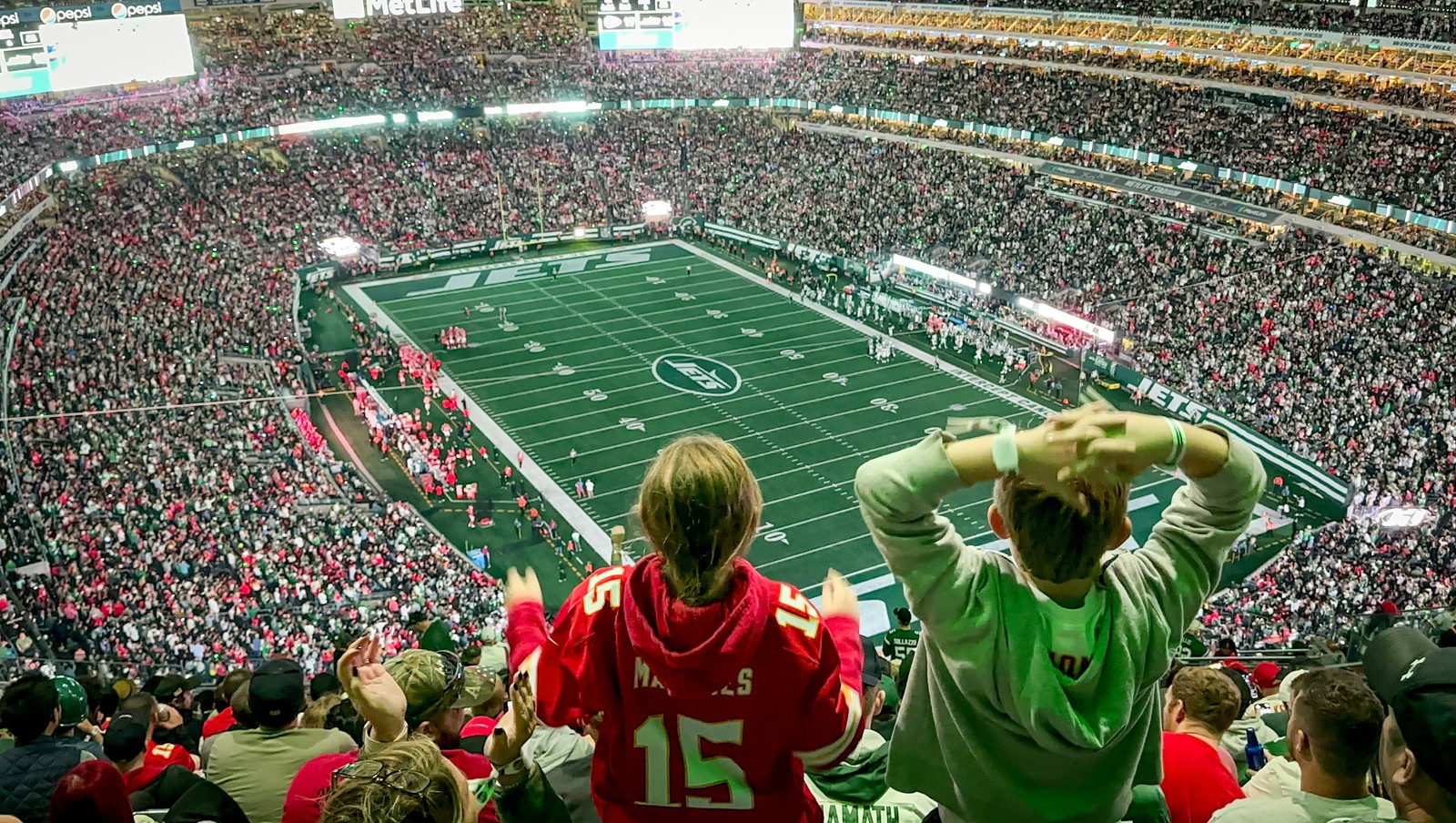
American football—also known as gridiron football or simply football—originated in the 19th century, evolving from various older ball games related to rugby. In recent decades, it has grown into a national obsession, rivaling baseball and even surpassing it in viewership, with millions tuning in every weekend.

The Super Bowl and similar events have become iconic elements of American culture, transforming into major community celebrations that draw more than just football fans. Major events like the Super Bowl bring families and friends together across the country, often featuring entertainment segments and halftime shows that transform these sporting events into full-blown celebrations.

5
Barbecuing

Image: Vincent Keiman

Barbecuing is an art form in America, with roots tracing back to indigenous peoples and early settlers. Whether it’s a Fourth of July cookout or a casual weekend gathering, the grill is central to American social life. The tradition initially spread through pit barbecues, where meats were smoked and cooked over a dug trench filled with burning embers.

Over time, this technique evolved into the conventional backyard grilling we use today. Despite the widespread popularity of standard barbecues, styles vary significantly by region, each with its own distinct flavors and techniques, often featuring elaborate sauces or unique smoking methods.

6
Auto Racing

Image: Tim Trad

Auto racing—and particularly stock car versions of the sport like NASCAR—has captivated the imaginations of Americans almost since the invention of motor cars in the early 20th century. Drawing inspiration from popular European races like the Paris-Rouen contest, the enthusiasm for motor racing quickly took hold in the U.S.

The first American automobile race is generally considered to be the Thanksgiving Day Chicago Times-Herald race on November 28, 1895. As cars became more accessible and the automotive industry developed, racing grew in popularity, eventually evolving into the high-octane spectacle that is now a distinctly American tradition.

7
Gardening

Image: Benjamin Combs

Gardening has always been a cherished American hobby, providing a peaceful retreat within one’s home while also beautifying one’s surroundings. From victory gardens during wartime to modern suburban flower beds, gardening remains a thriving pastime for Americans everywhere.

It’s a way to create something beautiful and sustainable, connecting with nature in a personal and meaningful way. Recently, interest in homegrown vegetables and organic food has surged, with an estimated 40 percent of American households—33 million—growing their own produce.

8
Movies

Image: Kilyan Sockalingum

Since the early 20th century, movies have been integral to American culture. Whether going to a local theater or, more recently, enjoying a cozy movie marathon at home, millions of Americans have shared this experience for almost a century. As Hollywood and the film industry evolved, American movies reached audiences worldwide, earning acclaim for their excellence.

Today, the magic of cinema continues to captivate Americans just as it did decades ago. This is no surprise, as the love for good storytelling and innovation—two true American passions—lies at the heart of this cherished tradition. Although the 2020 pandemic dealt a blow to movie attendance, it has been steadily recovering, showing no signs of slowing down.

9
Home-Cooking

Image: Or Hakim

More than just a necessity, home-cooked meals are a true American passion. Food is a key part of a nation's identity, so it’s no surprise that cooking at home holds a special place in the hearts of many Americans. Our country’s incredibly diverse culinary heritage offers a vast array of edible experiences to choose from, and gathering with friends and family to enjoy delicious homemade dishes is one of our favorite pastimes.

Whether preserving family recipes passed down through generations or trying new culinary experiments, home cooking is always a way to connect with loved ones, celebrate traditions, and enjoy the satisfaction of a meal crafted with love and skill.

10
Road Trips

Image: averie woodard

With a country as vast and beautiful as ours, it’s no wonder Americans often choose to spend their vacations exploring its diverse landscapes. From bustling cities to scenic countryside, domestic travel is not always just about relaxation—it can also be an adventure of self-discovery and a journey through our shared history.

And there’s certainly no shortage of sights to see! From the breathtaking vistas of our national parks to meticulously preserved historic sites, few experiences foster a deeper connection to our heritage. Whether it’s the towering peaks of the Rockies, the rolling hills of the Appalachians, or the sun-kissed shores of the coasts, every corner of the country offers something new to discover.

General General 4 min read

Haunted and happy to show it

Think you're brave? Explore these 13 haunted US spots… If you dare

Image: Herbert Aust

If you think ghost stories are just for campfires, think again. The United States is full of places where the past still lingers, and some say the residents never really left. From historic hotels to lighthouses, these spots are brimming with charm, history, and a touch of mischief from the other side. So grab your sense of adventure, keep your camera handy, and join us for a lighthearted stroll through 13 of America’s most haunted places.

1
Bodie, California

Image: Michael & Diane Weidner's profile Michael & Diane Weidner

Once a booming Gold Rush town in the late 1800s, Bodie now sits frozen in time. Visitors wander through dusty streets past old saloons and storefronts that look as if their owners just stepped out for lunch… a century ago. Locals whisper about strange sounds and ghostly piano music. And here’s a fun superstition: take anything home, even a pebble, and bad luck might just hitch a ride with you.

2
Bonaventure Cemetery, Savannah, Georgia

Image: Alla Kemelmakher

This is Southern Gothic at its finest. Towering oaks drip with Spanish moss over winding paths and Victorian monuments. Some visitors claim to have seen a little girl in a dress near a certain marble statue, while others swear they’ve heard distant laughter or the sound of dogs barking. Even if you never meet a ghost, the beauty of this historic cemetery will linger with you.

3
Crescent Hotel, Eureka Springs, Arkansas

Image: Nick Elmer

Often called "America’s most haunted hotel," it’s also one of the prettiest in the Ozarks. Over its long history, it’s been a resort, a college, and even a so-called cancer hospital. Guests today report friendly phantom encounters, from a Victorian gentleman strolling the halls to a playful little girl. Whether you meet the staff or the "extra" guests, you’ll get a good story out of your stay.

4
Dock Street Theatre, Charleston, South Carolina

Image: Brittani Burns

Charleston is rich in history, and this theater is a key part of its story. The stage has witnessed centuries of performers, fires, and renovations. Visitors sometimes report seeing a woman in a red gown gliding across the balcony, while others hear faint footsteps backstage when no one is there. Even if you don’t believe in ghosts, the building’s charm might still sweep you off your feet.

5
The Driskill, Austin, Texas

Image: Matthew Smith

This stately hotel has been greeting travelers since 1886, and some say its original owner never checked out. Guests report flickering lights, strange scents, and the occasional sighting of a figure in old-fashioned clothing. With its grand lobby and polished brass, you might just forget you came for ghost stories and stay for the atmosphere.

6
Honolulu International Airport, Hawaii

Image: Pascal Meier

Not every haunted spot is old and creaky, you know? At this busy airport, passersby tell of a "lady in waiting" seen in off-limits areas, said to be searching for a long-lost love. A few travelers have even reported toilets flushing on their own or paper rolls unraveling without help. We can say mystery flies around here!

7
Hotel Monte Vista, Flagstaff, Arizona

Image: Jacob

This historic hotel has welcomed movie stars and musicians, but it’s the uninvited guests that make it famous. From mysterious phone calls to the sound of a baby crying in an empty hallway, there’s never a dull moment. One legendary long-term boarder even hung raw meat from a chandelier—a story the staff still tells with a grin.

8
Lincoln Park Zoo, Chicago, Illinois

Image: Deborah L Carlson

A zoo might not seem spooky, but this one was built atop an old cemetery. Not all of the bodies were moved, and over the years, visitors have reported spotting mysterious figures or feeling sudden chills. Still, the zoo’s lush gardens and animal exhibits make it a must-see—haunted or not.

9
The Mark Twain House, Hartford, Connecticut

Image: Jessica Furtney

This handsome Victorian home is where Mark Twain penned some of his most beloved works. Visitors have reported faint traces of cigar smoke in the billiard room, even though smoking ended long ago. Others claim to have seen a lady in white near the stairwell. History buffs will appreciate the house’s charm, ghost or no ghost.

10
Pittock Mansion, Portland, Oregon

Image: Sean Benesh

Built by a wealthy couple with big dreams, this mansion boasts sweeping views and fine craftsmanship. Sadly, the owners lived there for only a few years before passing away. Tour guides say the scent of roses sometimes fills the air when no flowers are in sight, and a certain painting is said to move on its own.

11
St. Augustine Lighthouse, Florida

Image: Evgeni Tcherkasski

Perched on the coast, this lighthouse has been guiding ships since the 1800s. Some visitors report hearing the giggles of children playing or catching sight of a figure high in the tower. Even without the ghost tales, the view from the top is worth every step.

12
Trans-Allegheny Lunatic Asylum, Weston, West Virginia

Image: Andy Li

With its massive stone walls and sprawling grounds, this former asylum looks straight out of a movie set. Once home to thousands of patients, it’s now a historic site where tour guides share both medical history and lighthearted ghost tales. Maybe you’re in it for the architecture, or maybe it’s the stories. Whatever draws you in, it’s a fascinating place to explore.

Culture Culture 6 min read

Geniuses at work

We're here today because of them! Meet 10 Americans who changed history

Image: Quino Al

The United States is a land of progress and innovation, so it makes sense that many of the world's most important inventors and scientists are Americans. From breakthroughs like the lightning rod and the light bulb to advancements in the world of medicine, biology, and astronomy, there have been many men and women who, from different fields of study, have contributed to the scientific progress of our country and the entire world. Join us as we review these 10 American inventors and scientists who changed history!

1
Thomas Edison

Image: Call Me Fred

When it comes to inventors, we can't fail to mention the incredible Thomas Alva Edison.

Edison was born on February 11, 1847, in Milan, Ohio, and since he was a child, he showed his interest and talent in mechanics and electricity. At the age of 11, he set up his first laboratory in his parents' home, and by the age of 12, he ran his own business: a newspaper he designed, printed, and sold himself.

Creator of the phonograph (the first device capable of recording and reproducing sounds) and a fundamental part in the development and popularization of inventions such as the electric light bulb and the motion picture camera, Edison patented more than 1000 creations during his lifetime. Impressive!

2
Benjamin Franklin

Image: Dan Mall

Born in Boston, Benjamin Franklin was one of our Founding Fathers, the men whose principles, values, and ideas shaped America. But as if that weren't enough, Franklin was also a renowned scientist, inventor, and polymath.

A pioneer in the field of electricity, he's remembered for his famous kite experiment, which demonstrated the electrical nature of lightning and led to the invention of nothing less than the lightning rod. In addition, he's also credited with iconic inventions such as the first efficient wood-burning stove (later known as "the Franklin Stove"), the bifocal glasses, and the glass armonica.

3
Samuel Morse

Image: The New York Public Library

Unlike other scientists and inventors on this list, Samuel Morse began his journey in a completely different field: art.

Morse studied at Yale, where he completed his studies in 1810. He then embarked on a trip to Europe to continue his artistic education, but this trip awakened another peculiar interest in him. Frustrated by the communication methods of his time, Morse focused his creativity on finding ways to transmit information over long distances using electrical signals. Thus, the revolutionary telegraph was born, along with its way of communication, the Morse code.

4
The Wright Brothers

Image: Simon Fitall

The Wright Brothers were the famous siblings who, in the 20th century, achieved a goal long sought by humanity: flight.

Wilbur and Orville Wright are credited with inventing, building, and flying the world's first successful airplane. As you probably know, on December 17, 1903, they made the first sustained flight in history using the Wright Flyer, their iconic invention.

On that December morning, the brothers flipped a coin, letting fate decide who would be the first to test the aircraft. Although Wilbur won, that first attempt failed. So it was Orville who flew for 12 seconds, traveling 120 feet over Kitty Hawk, North Carolina.

5
George Washington Carver

Image: Tom Hermans

George Washington Carver was born in the 1860s in Diamond, Missouri. In the 1890s, his intelligence and hard work enabled him to enter Iowa State College (now Iowa State University), where he earned a master's degree in agricultural sciences. In 1896, he became the head of the agriculture department at Tuskegee Institute in Alabama, where his career as a professor and a researcher took off.

Thanks to his investigations and tests, George Washington Carver made major contributions to agriculture, including his innovative techniques for crop rotation . In addition, he developed many and varied peanut products, such as oil, flour, soap, and ink, helping to make this crop one of the key products of the country's economy.

6
Carl Sagan

Image: Vaibhaw Kumar

The stars and the mysteries of the universe captivated the famous Carl Sagan from an early age. Born in Brooklyn, New York, in 1934, Sagan studied at the University of Chicago, where he earned degrees in physics, astronomy, and astrophysics, eventually working and collaborating with NASA.

His contributions to the field of astronomy earned him a position in projects such as the Mariner, Viking, Voyager, and Galileo missions, thanks to which we have learned a lot about Venus, Mars, and Jupiter. The famous high temperatures of Venus, for example, were confirmed thanks to his work.

Additionally, his book and series Cosmos attracted the public's interest in astronomy, inspiring many others to follow in his footsteps.

7
Grace Hopper

Image: Museums Victoria

While computer programming may seem like a modern issue, the pioneers of this field were already working as early as the 1940s.

Grace Hopper graduated in mathematics and physics in 1928 and obtained a master's degree and a Ph.D in mathematics from Yale University in 1934. Famous as a pioneer in the world of programming, Hopper's work began during World War II when she joined the US Naval Reserve. There, she worked on the earliest electromechanical computers and developed extensive and complex manuals to operate them.

Her greatest contribution came from her work with mathematical codes, which she translated and adapted into innovative machine-readable language. That innovation led to the creation of the first high-level programming languages.

8
Jonas Salk

Image: Олег Мороз

Jonas Salk is none other than the mind behind a medical milestone: the polio vaccine.

In the 1940s, Salk was beginning his career in medical research. While working at the University of Michigan, his work was crucial in developing the first successful influenza vaccine for the military during WWII. This event marked his later study of the poliovirus.

Polio was devastating during the first decades of the 20th century, but that changed dramatically thanks to Salk's work. The scientist led a team that succeeded in developing the first safe and effective injectable inactivated poliovirus vaccine (IPV) in 1955, and the rest is history.

9
Barbara McClintock

Image: digitale.de

Although her name may not be as instantly recognizable as some others on this list, her work definitely is. Barbara McClintock has undoubtedly made one of the most significant contributions to medicine and genetics.

In the 1940s and 1950s, she worked with chromosomes, investigating their role in inheritance, which led to discoveries that forever changed our understanding of genes.

Before her, genes were believed to be fixed and immutable. But McClintock came to change that idea with her most famous contribution: the discovery of transposable elements, aka "jumping genes." She demonstrated that jumping genes are present in multiple organisms, including humans, and play an essential role in genetic evolution.

10
Alexander Graham Bell

Image: Misho Tektumanidze

Alexander Graham Bell became interested in sound and communication at a young age, something that led to his greatest and most remembered contribution: the telephone.

Although born in 1847 in Edinburgh, Scotland, Alexander Graham Bell settled in the United States in 1871 and became an American citizen years later. It was here that he developed most of his experiments and research.

After years of experimenting with methods to transmit sound through electrical currents, Bell finally spoke into his invention on March 10, 1876, saying to his assistant, "Mr. Watson, come here. I want to see you." That was the first successful telephone call in history.

Explore more American facts

Choose your favorite category!

General
General

As American as apple pie—the very best America has to offer!

Culture
Culture

Delve into the astounding richness of American lore.

Geography
Geography

Hop in and explore vast and diverse American landscapes.

History
History

Discover the key moments that shaped the United States.