History History 5 min read

MILLION DOLLAR ARTICLE

10 Fun Facts about American Currency

Image: Jp Valery

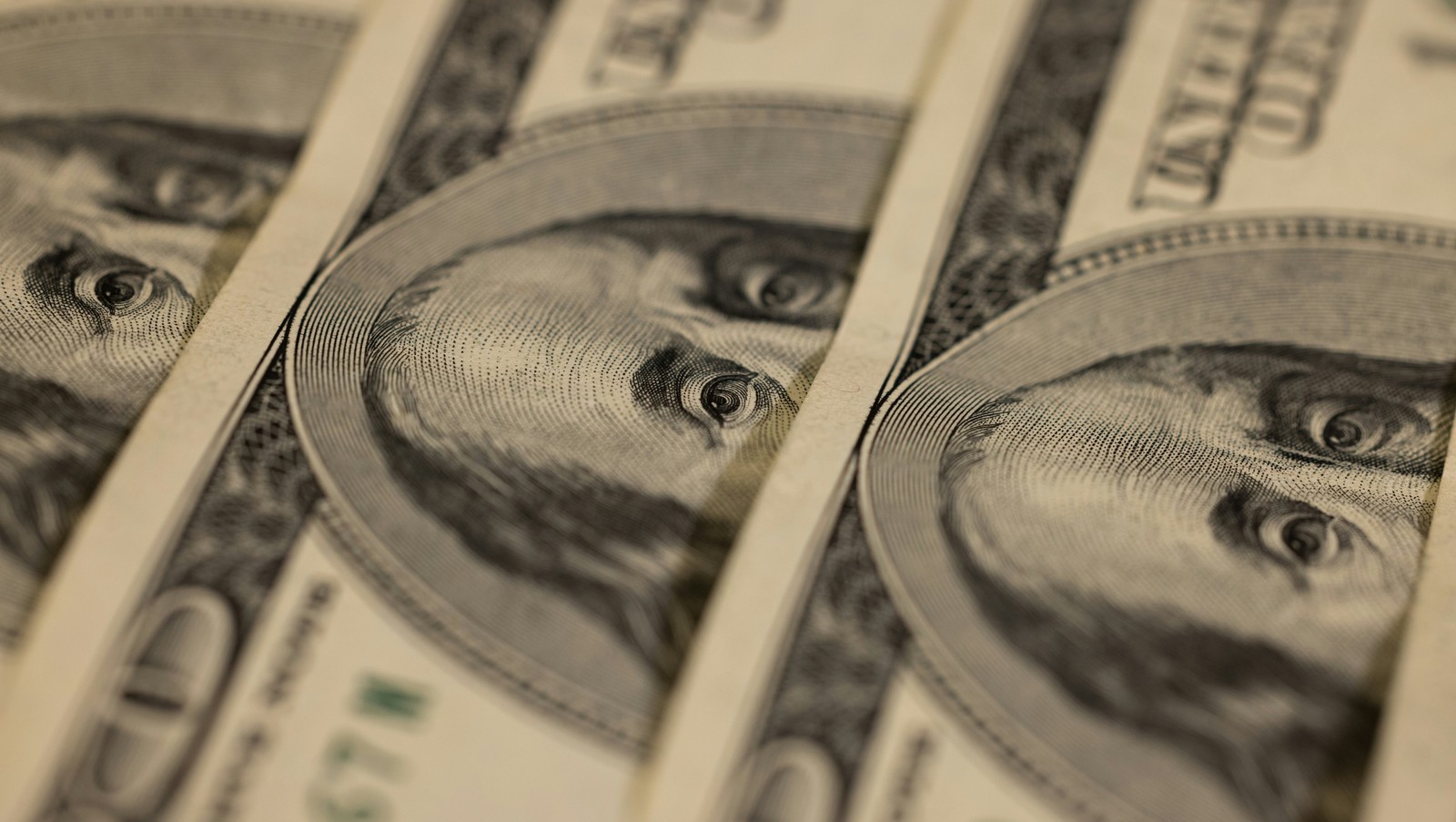
We bet you have never stopped to think about the dollar bills and coins you carry in your pocket, even if you do use them every day. The U.S. currency has purchasing power, of course, but it is also full of interesting facts and quirky details that are a testimony of the nation’s culture, history, and values.

Do you know how many folds it takes for a U.S. bill to tear? Do you know what the bills are made of? In this article, we’ll go through some of the most interesting facts about the history of our money. Read on and find them out!

1
Money Materials

Image: Jorge Salvador

We call them paper bills, but do they undergo the same process as any other paper? Naturally, they don’t. U.S. bills are mainly made of two materials: 75% of their composition is cotton and the 25% left is linen. Besides, they have randomly disbursed red and blue security fibers embedded in the paper.

This special blend is made by only one company in America and that is Crane & Co . The company, based in Massachusetts patented this special blend and it has been the sole provider of paper for currency since 1879.

2
Origin of the U.S. dollar symbol

Image: Paris Bilal

The dollar sign is a matter of debate. One line or two across a capital S, the symbol is today a worldwide sign for money, but where does it come from?

Even if there are several theories as to where the U.S. dollar symbol comes from, all of them agree that it was derived from the Spanish peso . When the time came, and the new nation needed its own currency, the basis was that of the Spanish coinage, which was the most common currency in the colonies before the country’s independence.

The adoption of the sign was made official in 1785, and today, the United States is not the only country that uses this symbol, Canada, Australia, and New Zealand do too!

3
Who appears on the bills?

Image: AR

Having your face forever stamped on the little piece of paper that rules the world should be a milestone in your career, right? However, there were certain rules as to who qualifies to be granted this honor .

Probably, the most surprising, yet the most logical one is that no living person can be portrayed in American currency. Since the Founding Fathers considered it unpatriotic to be portrayed while alive, this was first a tradition and then made official in an Act of Congress in 1866 .

However, contrary to popular belief, this honor is not only reserved for presidents! Anyone who contributes to the nation can be portrayed.

4
Folding Papers

Image: Emilio Takas

Bills come and go all the time. We take them out of our pockets and put them in our purses only to take them out again a few hours later and give them to the shop assistant. For a life that busy, we can only hope the paper is tough enough , right?

Well, as a matter of fact, it is. Compared to regular paper, which can only be folded 400 times before it breaks, money paper can be folded up to 8,000 times before it breaks .

It's not that you’re going to try it out and see, but you can rest assured: Fold your bills away, they can handle it!

5
Damaged Goods

Image: Jp Valery

Even if they can be folded that many times, the life of bills is limited, not to mention accidents happen. Who hasn’t sent a bill to the washing machine by chance?

So, what happens when a bill is damaged? Well, at least 50% of it has to be clearly identifiable for the bank to replace it , otherwise, you’ll just lose your money. You don’t feel like folding them much now, right?

On the other hand, and mainly due to time damage, at least 70% of the new bills are used to replace old bills . These bills, once taken out of circulation are shredded and sent to companies that can recycle them!

6
Security Features

Image: Colin Watts

Counterfeiting has been a problem ever since paper money was created and statistics about which countries counterfeited most of the money are simply shocking. But we won’t get into that.

What we will say is that thanks to technological advancement, the U.S. bill is getting harder and harder to counterfeit. In modern bills, there are at least six security features which are: UV security ribbon, raised printing, microprinting, 3D security ribbon, color-shifting ink, and traditional watermarks. Do you pay attention to them?

7
U.S. Coins

Image: Kenny Eliason

Coin production in America is in charge of the U.S. Mint and there are four production facilities across the country. They are located in Philadelphia, Denver, San Francisco, and West Point.

It is estimated that every year the Mint produces about 16 trillion coins which are valued at over $1.09 billion dollars. What is truly impressive is that Americans throw away an estimated 62 million dollars worth of coins every day!

They may not be worth much alone but don’t throw them away, all of them together can make you rich!

8
Green Ink

Image: maria pagan

Have you ever wondered why the U.S. dollar bills were green? It is not about design or aesthetics, even if we think they look pretty.

The decision to use green ink was a matter of security, in order to prevent counterfeiting. Back then, black and white ink made it easier to create photographic fakes. For that reason, green was the color of choice, and, when paper money was standardized in 1929, it had great acceptance due to the positive connotations of the color . Do you like it?

9
Andrew Jackson’s Take on Paper Money

Image: Elsa Olofsson

Every denomination has an important figure stamped on the front. In the case of the 20-dollar bill, Andrew Jackson was the chosen one.

Jackson was the seventh president of the United States and, even if it is not a rule that only presidents can be portrayed, his contributions gained him this honor.

Ironically, Jackson was not in favor of using paper money. For him, only gold and silver coins should have remained legal tender. After learning this, one can only assume he wouldn’t be so happy to be the face of the 20-dollar bill, right?

10
Facelifts and redesigns

Image: Kenny Eliason

One of the ways of keeping paper money safe and hard to counterfeit is by giving the bills new designs.

New faces were expected to appear in future bills, but, in the meantime, the changes always had to do with the proportions of the elements within each denomination. Bigger faces, rearrangement of the signatures, stuff like that.

Now, these changes and facelifts haven’t reached all the bills. 1-dollar bills haven’t been changed or redesigned ever since 1929. Why is that? Because it is not worth the trouble for criminals to counterfeit. One dollar won’t take them too far!

History History 5 min read

Achieving the unachievable, one step at a time

Did you know these 10 legendary American athletic feats?

Image: Renith R

Humans are capable of extraordinary deeds in the physical world, and quite a few of them have taken place in public. From an individual who decided to run 50 marathons in 50 consecutive days to another who climbed a rock wall 3,000 feet high with no ropes or safety equipment of any kind, history is filled with amazing feats accomplished by remarkable people. And, as it happens, quite a few of them are American citizens. Do you know these ten?

1
2008 Beijing Olympic Games - Michael Phelps

Image: Thomas Park

Winning a gold medal in the Olympic Games is, by itself, a huge achievement and a dream come true for any elite athlete. Repeating this feat is something that very few have achieved, and doing so has elevated these individuals to legendary status.

Now, imagine winning not one, not two, but eight gold medals in a single edition of the Olympic Games . This unimaginable feat was accomplished by the now-famous swimmer Michael Phelps. This remains the greatest individual achievement in one edition of the Olympic Games by any Team USA athlete.

2
1936 Munich Olympic Games - Jesse Owens

Image: Braden Collum

Another legendary Olympic moment took place many years before Michael Phelps was even born, when Jesse Owens, a Black athlete, won four gold medals in the 1936 Munich Olympic Games.

Despite competing on very controversial ground at the time, Owens blazed his way to Olympic glory and secured his place in the pantheon of the greatest American athletes.

3
Cuba to Florida Swim - Diana Nyad

Image: Matt Hardy

If you see the distance between Miami and Havana on a map, it doesn’t seem all that far. That is until you start approaching and realize that there are 110 miles between these two places. Believe it or not, this journey has been swum three times. The first two crossings involved a shark cage and several short rests.

The third person to achieve this milestone was Diana Nyad, who completed the swim on her fifth attempt at age 64 in 2013 . Nyad used a protective jellyfish suit, shark divers, and electronic shark-repellent devices to achieve an "unassisted" swim.

4
50 Marathons in 50 Days

Image: Pietro Rampazzo

Running a marathon is an impressive feat of endurance and strength for almost any human being. Running two marathons in two consecutive days is nearly impossible for anyone. Now, imagine running 50 marathons across 50 American states in 50 consecutive days.

That incredible accomplishment was achieved by Los Angeles native Dean Karnazes , beginning with the Lewis and Clark Marathon in St. Louis on September 17, 2006 , and finishing with the New York City Marathon on November 5 . A bit too much, maybe?

5
1968 Mexico City Olympic Games - Bob Beamon

Image: Gabriel Sanchez

On the rarest of occasions, humans are capable of physical achievements that defy what the human body is capable of doing. During the 1968 Summer Olympics in Mexico City, Bob Beamon broke the world record for men’slong jump with an incredible jump of 29 feet, 2.25 inches . Yes, that is almost 30 feet.

There was a delay in posting the distance, and Beamon didn’t know what the metric figure that finally appeared on the board equated to in feet and inches. When a teammate told him he had jumped over 29 feet, he collapsed on the track from the realization of what he had accomplished.

6
2017 Australian US Open - Serena Williams

Image: Kelly Sikkema

Winning a world tennis championship is a significant achievement for any tennis player. That is, unless you are a tennis player so accomplished that winning these tournaments is as regular as anything. The list of people who do that is very short, and the names on it are all very well known.

One of those names is, without a doubt, Serena Williams. Possibly the greatest female tennis player ever, she won the 2017 Australian Open . This fact alone may not seem out of place for such an athlete. But what sets it apart is the fact that she did so while pregnant .

7
17 minutes without breathing - David Blaine

Image: Jakob Owens

How long can you hold your breath underwater? Trained individuals can achieve very impressive results in this field, but one feat that stands out is the one accomplished by American illusionist David Blaine, who, on September 8, 2008, set a world record for static apnoea, by holding his breath underwater inside a tank for 17 minutes and 4.5 seconds.

Blaine is best known for his high-profile feats of endurance and has set and broken several world records. These include standing for 35 hours on a 100-foot-high pillar only 22 inches wide in 2002 and sitting in a clear Perspex box for 44 days in 2003 without eating and drinking only water.

8
900 spin - Tony Hawk

Image: Devin Avery

In the world of skating, a 360 is the name given to a stunt performed by executing a mid-air spin on the board. This is a complicated trick, achieved only by very experienced skaters. A 720 is a stunt performed by doing not one, but two mid-air spins on the board. As one can imagine, this is exponentially more difficult than a 360, and very few people can pull off this stunt.

Now, if we mention a 900, you might guess where we are going. This involves not one, not two, but two and a half mid-air spins on the board. This insanely difficult stunt was first performed (at least publicly) by Tony Hawk, the skateboard champion, at the 1999 X Games, cementing his status as a skateboarding legend.

9
2008 U.S. Open - Tiger Woods

Image: Will Porada

Tiger Woods is a familiar name in the sports world. He has won 14 major golf championships and achieved a level of superstardom seldom seen in the game. However, the one we are choosing to highlight today displays an extraordinary amount of tolerance to pain in the face of competition.

During the 2008 U.S. Open, he played a total of 91 holes with a torn ACL and double stress fractures in his left leg . With a course set up to give players the toughest test of golf imaginable, the U.S. Open is hard enough as it is. Add in debilitating leg injuries, plus 19 extra holes (thanks to a playoff with Rocco Mediate), and you have one of the greatest showings of pain tolerance in the history of tournament golf.

10
El Capitan Free Solo Climb - Alex Honnold

Image: Jessica Tuttle

Imagine climbing a huge stone wall approximately 3,000 feet high in less than four hours. Now imagine doing that, without any kind of ropes or safety equipment. That is exactly what Alex Honnold did on June 3, 2017, when he made the first-ever free solo ascent of El Capitan by completing Alex Huber's 2,900-foot big wall route, Freerider, in 3 hours and 56 minutes.

The climb, described as "one of the great athletic feats of any kind, ever," was documented by climber and photographer Jimmy Chin and documentary filmmaker E. Chai Vasarhelyi, as the subject of the documentary Free Solo which, among other awards, won the Academy Award for Best Documentary Feature in 2018.

Explore more American facts

Choose your favorite category!

General
General

As American as apple pie—the very best America has to offer!

Culture
Culture

Delve into the astounding richness of American lore.

Geography
Geography

Hop in and explore vast and diverse American landscapes.

History
History

Discover the key moments that shaped the United States.